+86-19862000127


Choosing the right conveyor belt is not a catalog exercise. It is a decision about load, distance, temperature, friction, sanitation, and maintenance access.
Global buyers face many options, including fabric belts, steel-cord belts, modular plastic belts, cleated belts, roller-top belts, and heat-resistant designs. Each type performs differently under real operating pressure. A belt carrying sharp limestone behaves unlike one moving sealed food packages. The difference appears at transfer points, pulley surfaces, and cleaning stations.
Industry data supports this growing complexity. Grand View Research’s Conveyor Belt Market report identifies mining, manufacturing, logistics, and food processing as major demand sectors. MarketsandMarkets also highlights automation, warehouse expansion, and infrastructure investment as important market drivers. These reports are useful, but they cannot replace site-specific engineering. That part is often underestimated.
ISO 14890 provides requirements for rubber and plastic-covered conveyor belting used in general material handling. Buyers should also review belt strength, cover grade, elongation, tracking behavior, joint design, and environmental resistance. A reliable supplier should explain test methods, warranty limits, and replacement procedures clearly.
This guide examines the top 10 conveyor belt types for global buyers. It compares construction, applications, advantages, limitations, and purchasing risks. “Convertor Belt” appears frequently in informal searches, although “conveyor belt” is the technically accepted term. Small wording issue. It still affects product discovery.
The right belt should survive the actual route, not merely match a specification sheet. Consider dust, moisture, temperature swings, cleaning chemicals, and unexpected impact. Details matter. A cheaper belt may cost more after repeated stoppages. That possibility deserves honest evaluation.
A conveyor belt is a continuous moving surface that transports materials between points. Its design depends on load weight, product shape, travel distance, temperature, and operating environment. Global buyers usually classify belts by material, construction, surface pattern, and application. Common materials include rubber, PVC, polyurethane, and woven fabric. Each choice affects grip, cleaning, flexibility, and service life.
Construction also matters. Buyers may compare flat belts, modular belts, cleated belts, sidewall belts, steel-cord belts, and fabric-reinforced belts. Flat belts suit general conveying, while cleated designs help move goods up an incline. Modular belts use linked sections and can simplify repairs. Steel-cord belts carry heavy loads across long distances. However, classification is not always consistent between suppliers. I have seen similar belts described differently in technical documents, which can create costly confusion.
Tips: Ask for belt width, tensile strength, cover grade, temperature range, pulley diameter, and joining method. Share product photos and loading details. Do not select a belt by appearance alone. A rough surface may improve grip but collect more residue. A stronger belt may still fail if the pulley is too small. Check test data, maintenance access, and replacement availability. Leave room for mistakes in early specifications, because real dust, moisture, and impact often exceed the original estimate.
Top 10 Conveyor Belt Types for Global Buyers
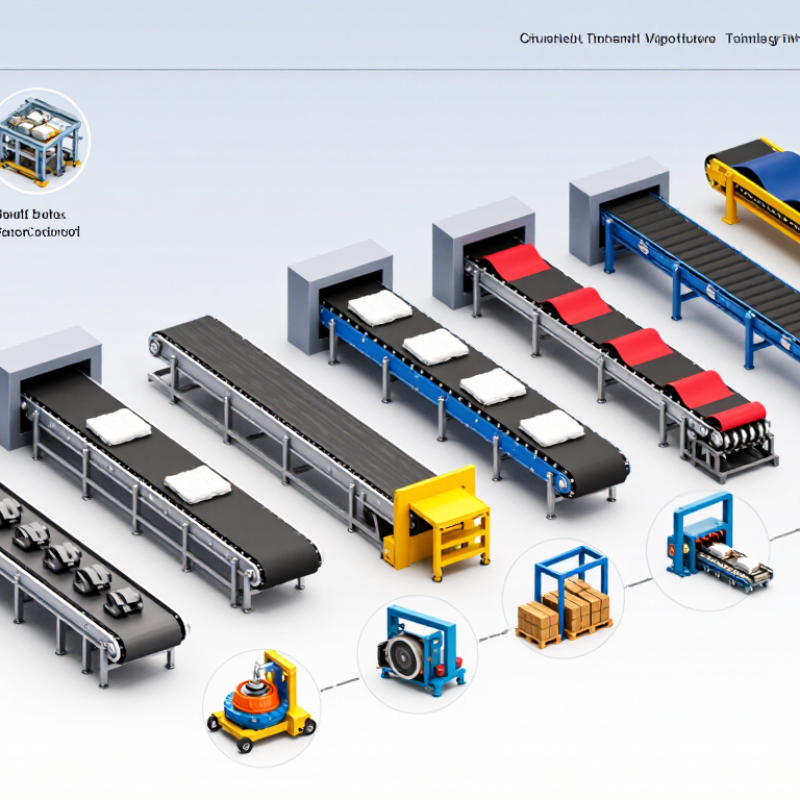
The ten main conveyor belt types serve different material-handling conditions. Flat belts suit cartons, parcels, and light assembly work on level lines. Cleated belts move loose products upward without frequent backsliding. Incline belts support warehouse transfer between floors, although excessive angles can cause product rolling. Troughed belts carry bulk materials such as grain, sand, and crushed stone over long distances. Sidewall belts handle steep elevation changes while keeping material inside the belt profile.
Modular plastic belts are useful in food processing and washdown areas because damaged sections can be replaced individually. Steel mesh belts tolerate heat, airflow, and drying processes in ovens or cooling tunnels. Roller bed belts reduce friction under heavy cartons and pallet loads. Timing belts provide accurate product positioning in packaging and assembly equipment. Magnetic belts help transport ferrous parts, especially when products must stay aligned beneath or above the belt surface. Each type has limits. No belt is perfect.
Tips: Check load weight, belt width, speed, temperature, moisture, and incline before purchasing. Confirm cleaning requirements and replacement-part availability with the supplier. I have seen systems fail because the belt was selected for capacity, but not for impact or dust. That mistake can be expensive. Leave room for maintenance access, too. Specification sheets are useful, but real operating conditions often expose details they miss.
Global buyers usually compare conveyor belts by surface appearance. That is risky. The internal structure often determines service life, tracking, and repair costs. The main ten types include general-purpose rubber, heat-resistant, oil-resistant, fire-resistant, steel-cord, textile-reinforced, cleated, sidewall, pipe, and modular plastic belts.
Rubber belts suit bulk materials and moderate temperatures, while textile carcasses offer flexibility over shorter conveyors. Steel-cord construction handles long distances and high tensions, but requires careful splicing. Cleated and sidewall belts move steeply loaded materials, though their profiles can trap dust. Modular plastic belts use replaceable links, making sanitation and maintenance easier in suitable processing environments. A 2024 MarketsandMarkets report estimated the global conveyor system market could grow from about USD 7.4 billion in 2024 to USD 10.6 billion by 2029. That growth reflects wider automation, not identical belt requirements.
Material selection must match the load. Oil-contaminated aggregate can swell ordinary rubber. Hot clinker can harden an unsuitable cover. According to the International Organization for Standardization, ISO 14890 classifies conveyor belt requirements for general bulk handling, including cover performance and dimensional tolerances. Industry testing also commonly measures tensile strength, abrasion loss, elongation, and splice efficiency. Field experience matters here. A belt may pass laboratory tests yet mistrack beside a vibrating transfer point. Not ideal.
Buyers should request carcass details, cover grade, operating temperature, pulley diameter, and test results. A low purchase price can hide frequent cleaning, slippage, or premature edge damage. The best specification is rarely the longest one. It is the one that reflects the actual material, loading pattern, and maintenance skill available on site.
Top 10 Conveyor Belt Types for Global Buyers
Choosing a conveyor belt starts with the operating conditions, not the catalog. Flat belts suit parcels, cartons, and light manufacturing. Cleated belts handle inclines where loose products may slide. Modular plastic belts work well in food processing because sections can be replaced quickly. Wire-mesh belts tolerate heat, washing, and controlled airflow. Fabric belts remain practical for bulk materials and moderate distances. Steel-cord belts support long, high-tension routes. Troughed belts improve carrying capacity for coal, aggregates, and grain. Roller-bed belts reduce resistance under heavy loads. Magnetic belts separate ferrous parts during recycling. Pipe belts enclose dusty materials and reduce spillage.
According to Global Market Insights, the conveyor belt market exceeded USD 5 billion in 2023, reflecting broad industrial demand. Market growth does not make every belt suitable. CEMA guidance stresses calculating belt tension, trough angle, loading rate, and belt speed before selection. A food line may need a modular belt with washdown resistance, while a quarry needs abrasion resistance and correctly sized impact zones. Small details matter.
Temperature changes cause trouble. Moisture does too. ISO 14890 provides requirements for rubber conveyor belts used in general material handling, but site conditions still require testing. Field inspections often find misaligned pulleys, weak cleaning systems, or underestimated startup loads. These are not minor errors. A belt may meet its specification and still fail early. Buyers should compare cover grade, splice method, pulley diameter, tracking needs, and maintenance access. The cheapest choice can become the least reliable one.
Global conveyor belt purchasing starts with the product, not the catalog photograph. A rubber belt may suit crushed stone, while a modular plastic belt handles washdown areas. Cleated, timing, steel, roller-top, and heat-resistant designs solve different transport problems. Buyers often compare only belt prices, then discover incompatible pulleys and costly installation delays. Standards matter early. Ask for tensile strength, abrasion resistance, temperature range, tracking tolerance, and splice method. ISO 14890 can guide general conveyor belt specifications, but it cannot answer every application question. Food-contact lines also require documentation for the destination market. Check certificates, test reports, and material declarations. Avoid vague “international standard” claims.
Customization should begin with measured conditions: belt width, center distance, load weight, incline angle, speed, cleaning chemicals, and ambient temperature. A supplier should provide drawings, samples, and a written tolerance sheet. Small details matter, such as a three-millimeter edge mismatch near a transfer point. Cost should include freight, import duties, spare fasteners, energy use, and replacement labor. The cheapest belt can become the costliest choice. Still, premium specifications are not automatically better. One evaluation underestimated cleaning frequency; the surface performed well, but maintenance time increased. That mistake changed the purchasing method. Compare total cost over the expected service life, not the first quotation. Reliable suppliers answer technical questions directly, disclose production details, and explain warranty exclusions. Request references from similar industries and verify them independently. A factory inspection may reveal more than polished brochures. Leave room for doubt.
Practical comparison for international sourcing. Cost figures are indicative 2025–2026 purchasing ranges in USD per m², typically excluding freight, taxes, installation, pulleys, and other conveyor components.
| No. | Conveyor Belt Type | Typical Applications | Common Construction | Typical Temperature Range | Relevant Standards or Requirements | Customization Options | Indicative Cost | Best-Fit Supplier Capability |
|---|---|---|---|---|---|---|---|---|
| 1 | General-Purpose Rubber Belt | Bulk handling of coal, aggregates, sand, limestone, cement, grain, and packaged goods. | Rubber covers with polyester/nylon fabric carcass; common grades include abrasion-resistant covers. | Approximately −25°C to +80°C, depending on rubber compound and operating conditions. |
ISO 14890
ISO 4195 where applicable
Cover grade, tensile strength, elongation, and splice requirements should be specified. |
Width, belt strength, cover thickness, edge type, cleats, tracking guides, punched holes, and endless splicing. | About $15–$45/m² |
Industrial belt manufacturers with fabric calendering, rubber compounding, vulcanizing, and field-splice support. |
| 2 | Abrasion-Resistant Rubber Belt | Quarries, mines, crushers, screens, recycling plants, and other applications involving sharp or abrasive materials. | High-abrasion rubber cover over EP or NN fabric carcass; thicker top covers are used for severe impact. | Approximately −25°C to +80°C. |
ISO 14890
ISO 4195 abrasion tests
DIN-style abrasion classifications may also appear in technical specifications. |
Higher cover thickness, impact-resistant breakers, reinforced edges, special carcass strength, and custom pulley diameters. | About $25–$70/m² |
Suppliers with verified abrasion-test data, controlled rubber recipes, and experience with quarry or mining conveyors. |
| 3 | Heat-Resistant Rubber Belt | Handling hot clinker, sintered ore, foundry materials, cement products, ash, and hot aggregate. | Heat-resistant rubber covers with heat-stable fabric carcass; different grades are selected according to material temperature and residence time. | Common continuous service ranges are approximately +100°C to +180°C; short-term material peaks may be higher. |
ISO 4195
ISO 14890
Heat-aging, cover cracking, and adhesion performance should be verified. |
Heat grade, cover thickness, breaker ply, carcass strength, edge design, and cooling or cleaning requirements. | About $35–$90/m² |
Rubber manufacturers with heat-aging laboratories and documented test results for the intended bulk material. |
| 4 | Oil- and Grease-Resistant Belt | Vegetable oil seeds, oily aggregates, wood products, refuse-derived fuel, recycling streams, and industrial materials containing oils. | Nitrile or other oil-resistant rubber cover with a fabric carcass selected for the required tension and troughing. | Approximately −25°C to +80°C, depending on compound and oil exposure. |
ISO 14890
ISO 1817 testing
Resistance should be matched to mineral oils, animal fats, or vegetable oils. |
Oil-resistance grade, cover thickness, antistatic properties, flame resistance, cleats, profiles, and endless joining. | About $30–$85/m² |
Suppliers able to provide immersion-swell data and compound compatibility information for the buyer’s specific oil. |
| 5 | Flame-Retardant and Antistatic Belt | Underground mining, coal handling, power plants, enclosed transfer systems, and applications with elevated fire-risk controls. | Flame-retardant rubber covers with conductive components and a reinforced fabric or steel-supported carcass. | Usually approximately −25°C to +60°C or +80°C, depending on formulation and regulatory approval. |
ISO 340
ISO 284
EN 14973 where applicable
Local mining, electrical, and fire-safety regulations may impose additional requirements. |
Fire grade, electrical resistance, belt strength, low-temperature performance, cover thickness, and approval documentation. | About $40–$110/m² |
Certified suppliers with traceable fire and electrical-resistance testing, quality audits, and mining compliance experience. |
| 6 | Steel-Cord Conveyor Belt | Long-distance, high-capacity, high-tension conveyors in mining, ports, power generation, and bulk terminals. | Longitudinal steel cords embedded in rubber, with transverse breakers and protective top and bottom covers. | Approximately −25°C to +80°C for standard grades; special compounds support heat, oil, or fire requirements. |
ISO 15236
ISO 14890
Steel-cord alignment, dynamic splice strength, cover grade, and splice procedure are critical. |
Belt strength, cord diameter, cord spacing, cover thickness, breaker construction, edge protection, and splice kits. | About $80–$220/m² |
Specialist heavy-duty manufacturers with steel-cord production, X-ray or equivalent inspection, and trained splice technicians. |
| 7 | Chevron or V-Profile Belt | Inclined conveying of coal, gravel, grain, fertilizer, bags, and other materials where flat belts may slip. | Rubber base belt with molded V-shaped profiles; profile height and pitch depend on inclination and material size. | Approximately −25°C to +80°C for standard rubber grades. |
ISO 14890 for base belt
Profile geometry, transverse stability, pulley compatibility, and splice design should be confirmed. |
Chevron height, profile pitch, belt width, cover grade, sidewalls, cleat layout, and custom endless length. | About $35–$100/m² |
Suppliers with reliable molded-profile tooling, accurate profile registration, and experience with inclined conveyors. |
| 8 | Cleated and Sidewall Belt | Steep-angle or vertical conveying of boxes, cartons, food products, pellets, waste, and bulk materials. | Base belt fitted with transverse cleats and, where required, corrugated rubber or thermoplastic sidewalls. | Typically −20°C to +80°C; food, low-temperature, or heat-resistant compounds require separate selection. |
ISO 14890 for rubber base belt
ISO 21183 where applicable
Food-contact, chemical, fire, and electrical requirements depend on the application. |
Cleat shape and spacing, sidewall height, belt width, angle, bucket attachments, guide profiles, and vulcanized or bonded joints. | About $60–$180/m² |
Fabricators with CNC cutting, molded cleat production, sidewall bonding, and accurate dimensional inspection. |
| 9 | PVC or PU Modular/Monolithic Belt | Packaging, parcel handling, light manufacturing, logistics, electronics, textiles, and general unit-load conveying. | Thermoplastic belt with fabric reinforcement, homogeneous PU/PVC construction, or modular plastic links with sprockets. | Common ranges are approximately −10°C to +80°C; PU grades may support higher oil resistance and wider hygiene requirements. |
ISO 21183
ISO 284 where antistatic
Electrical, chemical, and food-contact declarations should match the exact polymer and coating. |
Surface texture, cleats, profiles, perforations, guide strips, sprocket pitch, color, antistatic properties, and endless joining. | About $25–$120/m² |
Light-conveyor specialists with thermoplastic welding, modular assembly, hygienic design knowledge, and accurate belt tracking support. |
| 10 | Food-Grade Conveyor Belt | Meat, poultry, bakery, confectionery, fruit, vegetables, dairy, prepared foods, and pharmaceutical packaging areas. | Often TPU, PVC, silicone, or food-grade rubber with sealed surfaces and low-contamination construction. | Commonly approximately −30°C to +100°C; actual limits depend on polymer, cleaning chemicals, and thermal cycling. |
EU 1935/2004
EU 10/2011 for plastics where applicable
FDA 21 CFR requirements where applicable
HACCP, hygienic-design, traceability, and cleaning validation may also be required. |
Surface finish, release properties, metal detection compatibility, antimicrobial options, perforations, cleats, flights, and hygienic splices. | About $45–$160/m² |
Suppliers providing material declarations, migration or compliance documents, batch traceability, and hygienic installation support. |