Inquiry
Form loading...

How to Choose the Right Hanging Pulley?

Choosing the right Hanging Pulley starts with the load, the mounting point, and the job it must perform. A small workshop setup may need a different arrangement from a pulley used for repeated lifting. The details matter. A hook that fits neatly can still be unsuitable if the supporting structure or working load is not rated for it.

Archimedes, the ancient Greek mathematician associated with the study of mechanical advantage, is often credited with saying, “Give me a place to stand, and I will move the Earth.” The saying captures a useful idea, but a pulley does not make a heavy load safe by itself. Check the pulley’s rated capacity, compatible rope or chain, sheave size, attachment method, and operating environment. Look for clear manufacturer specifications, not just a reassuring product photo. Inspect the mounting surface, too; a strong pulley attached to a weak beam is still a poor choice.

Measure carefully. Then check again. The right Hanging Pulley should suit the actual load and lifting frequency, with suitable components throughout the system. Dust, moisture, and side-loading can affect performance, so account for the conditions where it will be used. I would not choose by price alone, though that is an easy mistake to make. When specifications are unclear, ask the manufacturer or a qualified lifting-equipment professional before installation. A cautious choice may take longer. It is usually the more dependable one.
How to Choose the Right Hanging Pulley?

Identify the Pulley Type, Mounting Method, and Intended Duty

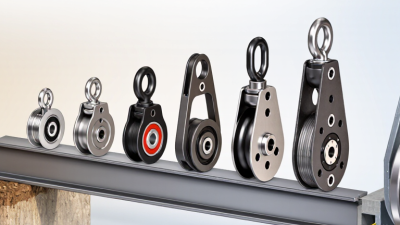
A hanging pulley should match the line, the load, and the way it will move. A fixed pulley changes direction but stays in place. A swivel model can follow a changing pull angle, which may help reduce side loading. Match the sheave groove to the rope or cable diameter. Too narrow can pinch; too wide can let the line wander. Small details matter.

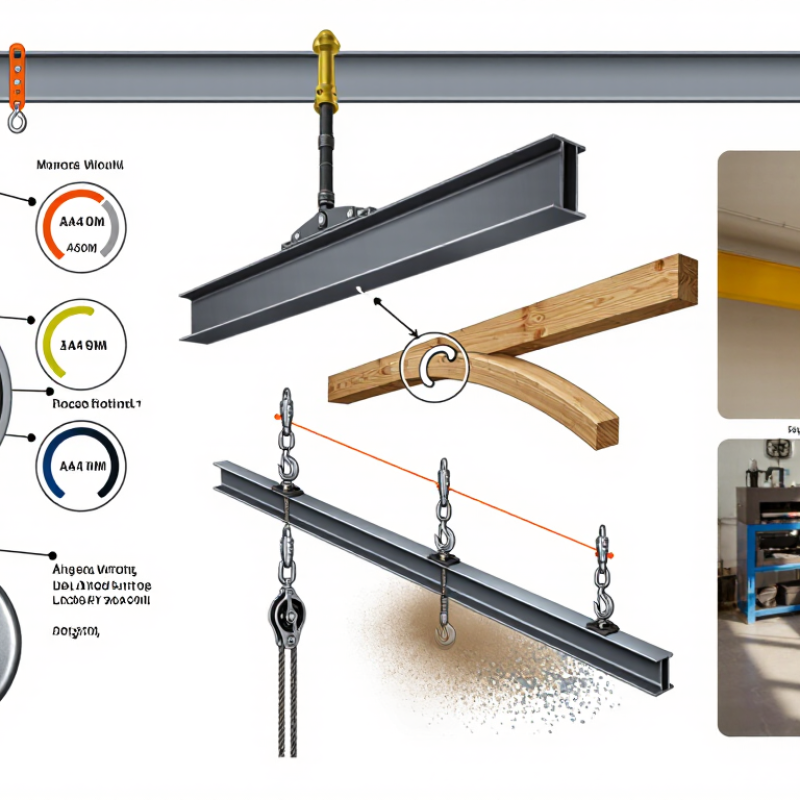
Next, look closely at the mounting method. A ceiling eye, beam clamp, and wall bracket each transfer force differently. Check that the supporting structure and fasteners are suitable, not just the pulley itself. Compare the rated working load of every component in the setup. The lowest rating sets the practical limit. A heavy-looking pulley is not proof of capacity. I would double-check the load figures, even when the hardware feels reassuring in hand.

Think about the intended duty. Occasional, slow lifting differs from repeated cycling or a line that starts and stops. Moving loads can create forces beyond their resting weight, so a static rating alone may not tell the whole story. Dust, moisture, and outdoor exposure can also affect material choice and maintenance needs. Inspect the groove and mounting point regularly. It is easy to overlook wear when the pulley still turns smoothly.

Calculate the Maximum Load and Match It to the Marked Working Load Limit

Choosing a hanging pulley starts with the load, not the pulley’s appearance. Add the weight of the object, sling, hooks, and other hardware that will hang from the system. Use one unit throughout, such as kilograms or pounds. Then account for movement: a load that starts, stops, or swings can place more force on the equipment than a stationary load. A neat calculation can still miss that.

Next, identify the pulley’s marked Working Load Limit (WLL) and check what the marking applies to. Compare it with the maximum force expected at that specific pulley, not just the object’s weight. Rope arrangement, reeving, and line direction can change the forces on the pulley and its support. Follow the manufacturer’s capacity information for the exact setup; do not assume a multi-part line makes every component’s load smaller. The WLL is not the breaking strength, and it should never be treated as a target to exceed. Leave a sensible margin for uncertainty.

Check every connected component, including the anchor, rope, and connectors. The system is only as strong as its weakest rated part. Inspect for bent plates, worn sheaves, damaged rope, or unreadable markings. If the load calculation or setup remains unclear, pause and ask a qualified lifting professional to review it. A quick visual guess is not enough.

Estimate Mechanical Advantage: A 2:1 Block Halves Ideal Line Pull

How to Choose the Right Hanging Pulley?

Estimate Mechanical Advantage: A 2:1 Block Halves Ideal Line Pull

A 2:1 block uses two rope sections to support the moving block. In an ideal setup, each section carries half the suspended load, so the hauling line needs half the load’s force. The U.S. Department of Energy’s Fundamentals Handbook, Mechanical Science, Module 3, explains this mechanical-advantage principle. For a 100 kg load, the ideal line pull is about 490 newtons. The trade-off is distance: you must pull roughly two metres of rope to raise the load one metre. That extra movement is easy to overlook.

Real pulleys do not deliver ideal results. Bearing friction, rope stiffness, and poor alignment increase the force needed at the hauling end. The neat number is tempting; it is not a field measurement. Include the hook block and rigging when estimating total suspended weight, then check the pulley’s rated capacity and the rope path. A 2:1 ratio does not double the equipment’s safe working load. If the line snags or the block tilts, stop and inspect the setup rather than pulling harder. For repeated lifts, measure line pull with suitable equipment; a calculation alone may miss friction and setup losses.

Check Sheave D/d Against Rope-Maker Tables; Guidance Often Spans 18:1–34:1

For a hanging pulley, check the sheave D/d ratio against the rope maker’s table. D is the sheave’s pitch diameter; d is the rope’s nominal diameter. Do not measure the sheave across its outer rim. The Wire Rope Users Manual, published by the Wire Rope Technical Board, explains that bending over sheaves affects rope service life. Rope construction and duty also matter. Guidance may span 18:1–34:1, but that is not one universal pass mark. A compact sheave can make a rope look tidy while accelerating fatigue. It is easy to miss.

Tips: Confirm the exact rope construction and diameter before selecting a sheave. Compare the table’s required D/d ratio with the pulley’s pitch diameter. For example, a 12 mm rope at 18:1 needs a 216 mm pitch diameter; at 34:1, it needs 408 mm. Check the full setup, too: repeated bending, load, and operating cycles can change the suitable choice. ISO 4308-1 provides rope-selection guidance for cranes, but the rope maker’s table should govern the particular rope. I would recheck measurements before installation. Small errors happen.

How to Choose the Right Hanging Pulley? - Check Sheave D/d Against Rope-Maker Tables; Guidance Often Spans 18:1–34:1

Use the table as a dimensional screening aid. The listed sheave pitch diameters are calculated from D = (D/d) × d, where D is sheave pitch diameter and d is nominal rope diameter.

Nominal Rope Diameter, d D at 18:1 D at 22:1 D at 26:1 D at 30:1 D at 34:1
10 mm 180 mm 220 mm 260 mm 300 mm 340 mm
12 mm 216 mm 264 mm 312 mm 360 mm 408 mm
16 mm 288 mm 352 mm 416 mm 480 mm 544 mm
20 mm 360 mm 440 mm 520 mm 600 mm 680 mm
25 mm 450 mm 550 mm 650 mm 750 mm 850 mm
32 mm 576 mm 704 mm 832 mm 960 mm 1,088 mm

Selection check: These values are arithmetic examples, not universal minimums or product recommendations. Confirm the required D/d ratio for the exact rope construction, duty, and operating conditions in the rope maker’s guidance. Use the maker’s definition of pitch diameter; do not substitute the sheave’s outside diameter. Also verify groove profile and condition, rope alignment, fleet angle, load, speed, and the pulley assembly’s rated capacity.

Verify Rigging-Hardware Requirements Under ASME B30.26 and Inspect Before Use

How to Choose the Right Hanging Pulley?

A hanging pulley is only as dependable as its rating, mounting, and inspection. Check the marked working load limit against the entire lifting setup, including the load, sling angle, and any side pull. ASME B30.26 covers rigging hardware and sets expectations for inspection and safe use. Confirm the pulley or block falls within the standard’s scope, then follow its current edition and your site procedures. Never treat a component’s breaking strength as its working capacity.

Before each use, look for cracks, bent side plates, worn pins, loose fasteners, damaged hooks, and a sheave that binds or has sharp grooves. Small defects matter. Make sure the rope or chain matches the pulley’s size and type, and that the suspension point is secure. The U.S. Bureau of Labor Statistics reported 5,283 fatal work injuries in 2023; that figure covers all industries, not pulley incidents, but it underscores why careful checks matter. Record and remove questionable hardware from service. A quick visual check can miss hidden wear, so I would not rely on appearance alone. When markings are unreadable or damage is uncertain, pause the lift and seek a qualified inspection. No guesswork.