2026 Best Hanging Pulley Types for Global Buyers?
Global buyers are entering a more demanding material-handling market in 2026. Grand View Research values the global material handling equipment market at over USD 200 billion, with automation and warehouse expansion driving continued demand. However, that broad figure does not measure Hanging Pulley sales directly. Product categories remain inconsistent across research providers.
The practical question is narrower: which Hanging Pulley type matches the load, travel path, environment, and maintenance capacity? A compact single pulley may suit light workshop movement. A multi-sheave block can reduce operating effort, but it may increase friction, weight, and inspection needs. In coastal warehouses, salt exposure can attack bearings and wire-rope surfaces. In dusty factories, contamination can quietly change performance.
Ross Moloney, former CEO of the Lifting Equipment Engineers Association, has often stressed a central principle: “Safety is not a product; it is a process.” That principle matters when comparing fixed, swivel, snatch, and motorized pulley designs.
Reports from MarketsandMarkets and Fortune Business Insights also show strong growth in automation and industrial lifting applications. Yet market growth does not guarantee a suitable purchase. Rated capacity, working load limit, sheave diameter, rope compatibility, certification, and spare-parts access still require verification. A cheaper pulley can become expensive after repeated downtime.
This guide examines the best Hanging Pulley types for global buyers in 2026. It considers real operating conditions, not only catalog specifications. Some recommendations may remain imperfect. Regional standards and supplier data can differ. That uncertainty deserves attention before procurement.
What Are Hanging Pulleys and How Do They Work?
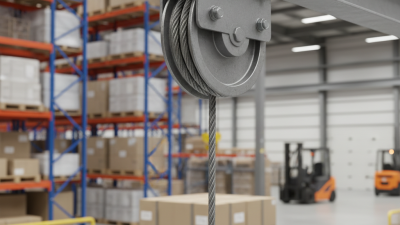
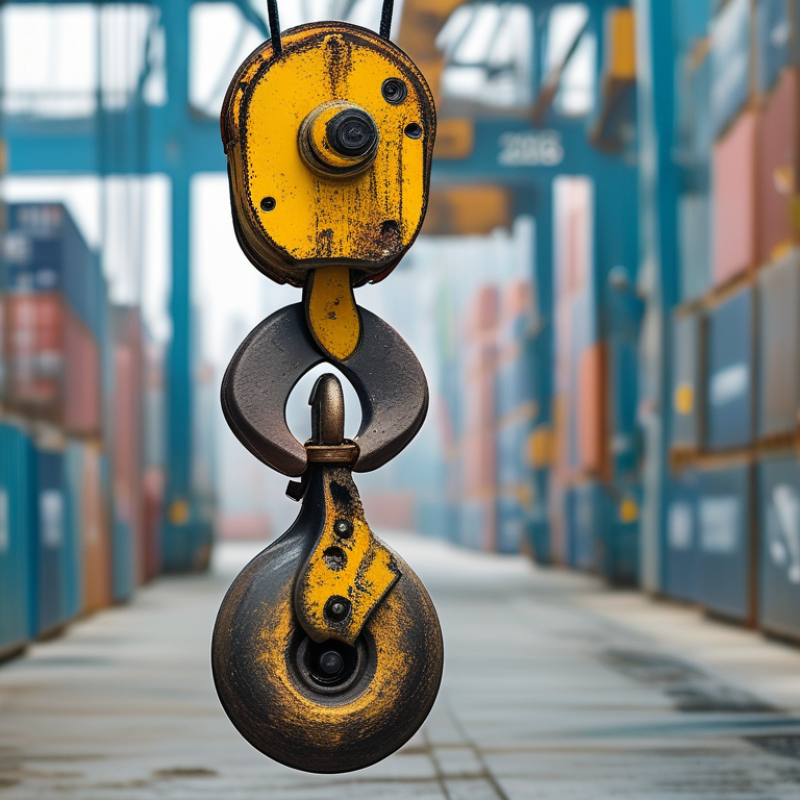
A hanging pulley is a wheel with a grooved rim, suspended from a beam, frame, or anchor point. A rope or wire rope runs through the groove. As the sheave turns, it redirects force and helps move a load with controlled motion. A fixed pulley changes direction, not lifting force. A movable pulley can share the load across two rope sections, creating an ideal 2:1 mechanical advantage. Real performance is lower because of bearing friction, rope stiffness, and poor alignment. Small details matter.
Global buyers should check the working load limit, rope diameter, sheave groove, bearing type, and anchorage strength.
Side loading can distort the pulley and damage the rope. Shock loading is worse.
The U.S. Bureau of Labor Statistics reported 1,068 fatal injuries in transportation and material-moving occupations in its 2023 Census of Fatal Occupational Injuries. The figure is not pulley-specific, but it supports careful lifting control.
ISO 4309:2017 also emphasizes regular wire-rope inspection and discard criteria.
A clean catalogue drawing can hide field problems. I would not select a pulley by capacity alone. Check the actual rope path, load angle, operating temperature, and inspection access.
That assumption deserves testing.
Main Hanging Pulley Types for 2026 Applications
Main Hanging Pulley Types for 2026 Applications
Hanging pulley selection depends on load direction, travel distance, and duty cycle. Fixed pulleys redirect force and suit light lifting points, maintenance bays, and compact workshops. Movable pulleys reduce operator effort but require stronger supporting structures. Block-and-tackle systems combine both functions for heavier loads. They offer mechanical advantage, although extra sheaves increase friction and inspection needs.
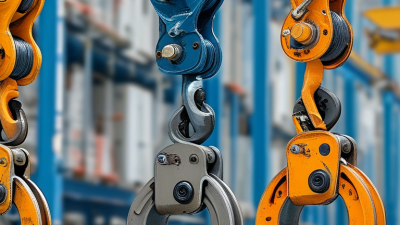
Snatch pulleys open at the side, allowing technicians to insert wire rope without threading an entire line. They fit recovery work, temporary lifting, and changing rope directions. Swivel pulleys help control twisting on moving lines. Sheave assemblies for electric hoists support repeated industrial cycles, but their groove profile must match the rope diameter. A small mismatch can cause rapid wear.
The global crane market was valued at about USD 36.2 billion in 2023, according to Grand View Research, which forecasts a 4.6% CAGR through 2030. This growth supports demand for adaptable hanging components across warehouses, construction sites, and process plants. However, market growth does not remove engineering basics. ISO 4309 requires wire-rope inspection and discard decisions based on visible damage, broken wires, and deformation. Buyers should verify working load limit, sheave material, bearing design, temperature range, and local compliance. A polished specification sheet can still hide poor installation assumptions. Field measurements matter. Tensile capacity alone is not enough.
How to Compare Capacity, Materials, and Safety Features
2026 Best Hanging Pulley Types for Global Buyers?
How to Compare Capacity, Materials, and Safety Features
Choosing a hanging pulley starts with the working load limit, not the advertised breaking strength. A pulley rated for 500 kilograms may perform poorly under repeated lifting, side pulling, or sudden loading. Check the required capacity, rope diameter, lifting frequency, and attachment point together. Leave a practical safety margin. More capacity is not always better if the beam or anchor cannot support it.
Material selection depends on the working environment. Zinc-plated steel suits many indoor applications, while stainless steel better resists moisture and salt exposure. Nylon sheaves can reduce rope wear and operating noise. Steel sheaves usually handle heavier loads and frequent use. Inspect the sheave groove carefully. A sharp edge can damage rope fibers quickly. Small details matter.
Safety features deserve physical testing and clear documentation. Look for a load-rated swivel, a closed side plate, a secure hook latch, and a guard that prevents rope escape. A brake or locking mechanism may help with controlled positioning, but it does not replace operator training. Ask for inspection records, material information, and test evidence from a competent laboratory. Standards differ across markets, so local requirements must be checked before purchase. A polished specification sheet can still hide weak assumptions. I would test movement under a light load before full operation. That small step is easy to miss.
2026 Best Hanging Pulley Types for Global Buyers
Compare representative working load limits, material suitability, and safety considerations when selecting hanging pulleys for international applications.
How to read the chart: The ranges show representative working load limits (WLL) commonly used for general-purpose hanging pulley categories. Actual capacity depends on pulley diameter, rope or cable size, bearing design, reeving arrangement, mounting point, and certified test results.
- Fixed-eye pulleys: Suitable for light-duty lifting and routing applications; galvanized steel is widely used for general environments.
- Swivel-eye pulleys: The rotating eye helps reduce side loading and improves alignment; stainless steel is preferable in humid or corrosive environments.
- Snatch blocks: Side-opening plates allow faster rope installation and are commonly manufactured from high-strength steel for heavier loads.
- Double block-and-tackle assemblies: Multiple sheaves can increase mechanical advantage, but the total system capacity is limited by the weakest component.
- Heavy-duty lifting blocks: Designed for high loads and frequent use; forged or alloy steel, guarded sheaves, load-rated hooks, retaining pins, and lubrication provisions are important safety features.
Global Sourcing Standards and Supplier Evaluation Criteria
For global buyers, hanging pulley selection should begin with the working condition, not the catalog picture. Single, double, snatch, and swivel pulleys suit different rope paths, lifting angles, and maintenance needs. Ask suppliers for rated load, safety factor, groove dimensions, bearing type, and heat-treatment records. The ISO Survey reports more than one million ISO 9001 certificates worldwide, but certification alone does not prove product reliability.
Supplier evaluation needs physical evidence. Request material certificates, batch traceability, load-test reports, inspection procedures, and sample measurements. Check whether the design follows applicable requirements, such as ASME B30.26 or EN 13157. The World Bank Logistics Performance Index 2023 assesses customs, infrastructure, logistics competence, tracking, and timeliness. These factors matter when replacement parts cross borders. UNCTAD reports that more than 80% of world merchandise trade by volume moves by sea, so packaging, rust protection, and moisture control deserve equal attention. I have seen attractive samples fail because the groove was slightly too narrow. That detail is easy to miss.
Tips: Compare three suppliers using the same technical questionnaire. Test one production sample before a large order. Photograph markings and packaging. Confirm spare-bushing availability and actual lead times. Do not accept “100% inspected” without inspection records. A perfect checklist does not exist; field feedback should revise it.



 +86-19862000127
 Phone
Phone Email
Email