 +86-19862000127
Inquiry
Form loading...
-
WhatsApp
-
 Phone
Phone -
Phone
-
 Email
Email -
Email
Choosing the China best Rigging Pulley manufacturer requires more than comparing prices. Global buyers need evidence, not polished promises. A dependable supplier should show load ratings, material specifications, factory procedures, and inspection records. The pulley must match the rope diameter, working load limit, sheave groove, bearing design, and lifting environment.
Rigging specialist Mike Parnell often emphasizes, “Plan the lift before you make the lift.” This principle fits every purchasing decision. A well-designed Rigging Pulley can move loads smoothly through cranes, winches, rescue systems, and industrial handling equipment. However, even a strong pulley can fail when users ignore side loading, worn ropes, poor alignment, or unclear working limits. Small details matter. Very much.
Experienced manufacturers usually provide drawings, sample testing, surface-treatment options, and traceable production records. Buyers should examine forged or machined construction, bearing protection, corrosion resistance, and sheave rotation. Factory audits can reveal practical details, such as clean assembly areas, calibrated testing machines, and labeled inspection stations. Photos are useful. They are not proof.
A reliable China-based supplier should also communicate clearly about customization, packaging, delivery schedules, and after-sales support. Yet no manufacturer deserves automatic trust. We must question incomplete certificates, unusually low prices, and performance claims without test conditions. Some purchasing decisions still depend on imperfect information. That is why careful verification remains essential.
This guide introduces the qualities that distinguish a capable Rigging Pulley manufacturer from a simple trading source. It focuses on experience, technical evidence, and responsible communication for buyers serving demanding global markets.
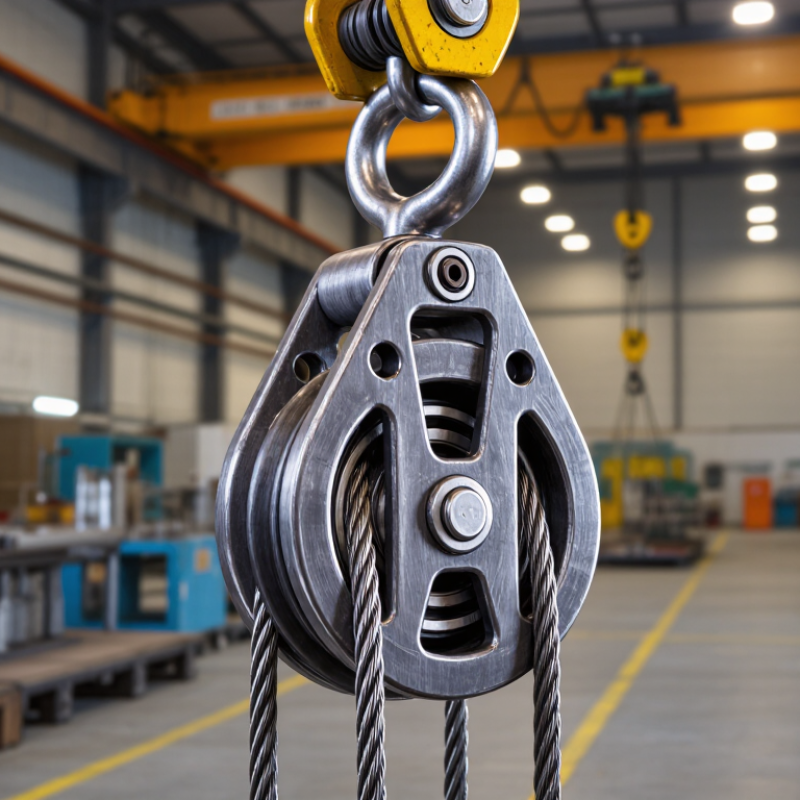
Rigging pulleys, often called sheaves or blocks, are mechanical devices used to guide and support lifting ropes. They reduce friction and redirect pulling force within a lifting system. As the rope passes through the grooved wheel, the load path becomes more controlled. A single pulley mainly changes direction. A block-and-tackle arrangement can also provide mechanical advantage. The trade-off is increased rope travel. That matters.
In practical lifting work, pulley selection depends on load weight, rope size, lifting angle, and working load limit. A trained rigger checks the sheave groove, cheek plates, hook, axle, and bearings before use. The groove should support the rope without pinching it. A damaged bearing may create heat and uneven movement. Small details count. I have seen clean-looking pulleys hide severe groove wear beneath dirt and grease. Alignment also affects performance, especially when the rope enters at an angle. Even a correctly rated pulley can perform poorly when overloaded or poorly positioned. Selection should follow recognized standards, manufacturer data, and site procedures. Inspection records should identify wear, deformation, corrosion, and unusual noise. The margin is real, but never unlimited. A pulley improves control; it does not remove the need for trained handling and careful load assessment.
Technical reference table for selecting, specifying, and using rigging pulleys in lifting applications
| Data Dimension | Rigging Pulley Type or Item | Definition / Typical Data | Role in a Lifting System |
|---|---|---|---|
| Basic definition | Rigging pulley | A grooved wheel mounted on an axle, designed to guide, redirect, or support a rope, wire rope, or synthetic line. | Changes the direction of a lifting line and can provide mechanical advantage when used in a multi-part line system. |
| Primary function | Line redirection | The pulley redirects the line without requiring the load path and operator position to be in the same direction. | Allows lifting systems to operate around edges, through fairleads, or toward a more convenient operator location. |
| Mechanical advantage | Single fixed pulley | Ideal mechanical advantage: approximately 1:1. The pulley changes direction but does not theoretically reduce the lifting force. | Improves handling position and line control; actual effort is higher than the theoretical value because of friction and equipment weight. |
| Mechanical advantage | Single movable pulley | Ideal mechanical advantage: approximately 2:1 when the load is supported by two rope sections. | Can reduce the ideal line force by about half, while increasing the amount of line that must be pulled to raise the load a given distance. |
| Mechanical advantage | Multiple-pulley system | Ideal mechanical advantage is related to the number of rope parts supporting the moving block. Friction, bending resistance, and uneven loading reduce real performance. | Provides greater lifting force multiplication for hoists, winches, rescue systems, and tensioning arrangements. |
| Construction | Sheave | The grooved wheel that carries the rope or wire rope. Common materials include steel, stainless steel, aluminum, and engineered polymers. | Supports the line and controls its bending path. The groove profile should be compatible with the line diameter and construction. |
| Construction | Side plates or cheek plates | Fixed or rotating plates that retain the line and protect the sheave. Some designs include a captive or opening side plate. | Reduces the risk of unintended line escape and provides structural support for the sheave and bearing assembly. |
| Construction | Axle, pin, or spindle | The load-bearing shaft around which the sheave rotates. Its diameter and material affect strength, deflection, and service life. | Transfers the working load from the sheave and side plates to the connecting shackle, hook, eye, or mounting structure. |
| Bearing system | Plain bushing | A sliding bearing with simple construction and relatively low maintenance requirements. Suitable selection depends on load, speed, lubrication, and environment. | Provides controlled sheave rotation for moderate-speed lifting and general-purpose rigging applications. |
| Bearing system | Ball or roller bearing | A rolling-element bearing designed to reduce rotational friction. Sealed versions help protect against dust and moisture. | Improves operating efficiency and smoothness, especially where the line moves frequently or the pulley rotates at higher speed. |
| Load rating | Working Load Limit (WLL) | The maximum permitted working load assigned by the manufacturer for a specified configuration, application, and direction of loading. | Provides the principal capacity value for selection. The WLL must not be exceeded and must be compatible with every connected component. |
| Design factor | Minimum breaking load versus WLL | A design or safety factor is used between the minimum breaking load and the rated working load. The required value depends on the applicable standard, product type, and application. | Provides a margin for manufacturing variation, wear, dynamic effects, and service conditions; it is not permission to exceed the WLL. |
| Line compatibility | Wire rope groove | The sheave groove should suit the wire-rope diameter and construction. An undersized groove can damage the rope, while an oversized groove can reduce support and control. | Preserves rope strength, reduces crushing and abrasion, and supports consistent movement over the sheave. |
| Line compatibility | Synthetic rope groove | The groove should support the rope without sharp edges, excessive compression, or conditions that cause melting, cutting, or flattening. | Protects fiber ropes from abrasion and bending damage while maintaining reliable tracking during lifting. |
| Common configuration | Single-sheave pulley | One grooved sheave in one frame. It is generally compact and simple to install. | Used for basic line redirection, light-to-medium lifting arrangements, temporary rigging, and guide-line systems. |
| Common configuration | Double-sheave or multi-sheave block | Two or more sheaves mounted in a common frame, often combined as a fixed block, moving block, or block-and-tackle system. | Creates multiple rope parts, increasing ideal mechanical advantage and distributing the load across the supporting line sections. |
| Connection method | Swivel-eye pulley | A pulley with a rotating eye or swivel connection that allows alignment with the applied line and load direction. | Helps reduce twisting and side loading when the line direction changes during operation, provided the swivel is rated for the application. |
| Connection method | Shackle-connected pulley | A pulley fitted with an eye, pin, or attachment point for connection through a compatible shackle or connector. | Provides a detachable connection for lifting, recovery, marine, forestry, and industrial rigging systems. |
| Environmental suitability | Corrosion-resistant pulley | May use stainless steel, protected steel, non-metallic sheaves, sealed bearings, or corrosion-resistant coatings depending on the environment. | Improves service life in marine, coastal, humid, chemical-exposure, and outdoor applications when material compatibility is verified. |
| Operating limitation | Side loading | A force applied at an angle that is not aligned with the pulley’s intended load path or mounting direction. | Can cause frame distortion, uneven bearing loads, rope escape, or reduced capacity. The pulley should be aligned with the line and load. |
| Operating limitation | Shock or dynamic loading | A sudden increase in force caused by acceleration, impact, abrupt braking, slack-line pickup, or a dropped load. | Can create forces substantially higher than the static load. Lifting systems should avoid shock loading and account for foreseeable dynamic effects. |
| Inspection point | Sheave and groove condition | Check for cracks, sharp edges, deformation, corrosion, excessive wear, rope imprinting, and restricted rotation. | Identifies conditions that can damage the line or reduce pulley performance before the equipment is returned to service. |
| Inspection point | Pin, axle, and fastener condition | Check for bending, elongation, looseness, missing retainers, damaged threads, and unauthorized modifications. | Confirms that the primary load-transfer components remain secure and capable of carrying the intended load. |
| Selection criterion | Rated capacity | Select a pulley with a WLL suitable for the applied load, reeving arrangement, line tension, angle, and foreseeable dynamic effects. | Prevents overloading and ensures that the pulley is not the weakest component in the complete lifting system. |
| Selection criterion | Sheave-to-line diameter relationship | The required sheave diameter depends on the rope type, diameter, construction, flexibility, and applicable design guidance. | Proper proportioning limits bending stress and fatigue, helping extend the working life of wire rope or synthetic rope. |
| Applicable guidance | Relevant standards and regulations | Product selection may involve standards such as ASME B30.26 for rigging hardware, EN 13157 for hand-powered cranes, EN 1492 for textile slings, and local occupational-safety regulations, where applicable. | Supports consistent design, marking, testing, inspection, and safe-use practices. The governing requirements depend on the country and application. |
| Documentation | Required product information | Typical information includes WLL, identification or traceability marking, compatible line size, material, connection details, inspection guidance, and operating limitations. | Enables buyers, operators, and inspectors to verify suitability and maintain traceability throughout the product life cycle. |
Safety note: The values and descriptions in this reference table are general technical guidance. Always follow the pulley manufacturer’s rated capacity, instructions, inspection requirements, and the regulations applicable to the intended lifting application. Never use a pulley with visible damage, a missing identification mark, or an unknown working load limit.