How to Choose the Best Lifting Pulley in 2026?
Choosing the right Lifting Pulley in 2026 means looking beyond price and advertised capacity. The correct choice depends on the load, lift height, operating frequency, environment, and available mounting points. A pulley suited to a quiet workshop may not perform well on a dusty construction site. Small details matter: rope or wire-rope compatibility, sheave diameter, bearing design, and the condition of the hook or shackle. Check every rating against the complete lifting setup, not just one component.
A practical rule from lifting-equipment specialists is: “Treat the pulley, line, and attachment as one system.” This is a general safety principle, not a verified quotation from a named expert. No source was supplied to confirm an individual expert’s words, so attributing a direct quote would be misleading. That distinction matters. Reliable advice should be traceable.
This guide will help you compare manual and powered options, understand load ratings, and assess materials, maintenance needs, and real operating conditions. It will also point out where product descriptions leave important questions unanswered. A shiny housing is not proof of suitability. Neither is a large capacity number on its own. Before choosing, consider how the pulley will be installed, inspected, and used day after day. The best option is the one that fits the actual job, with clear documentation and a safety margin appropriate to the application. It may take another minute to check. That minute is worthwhile.
Understand How Lifting Pulleys Work
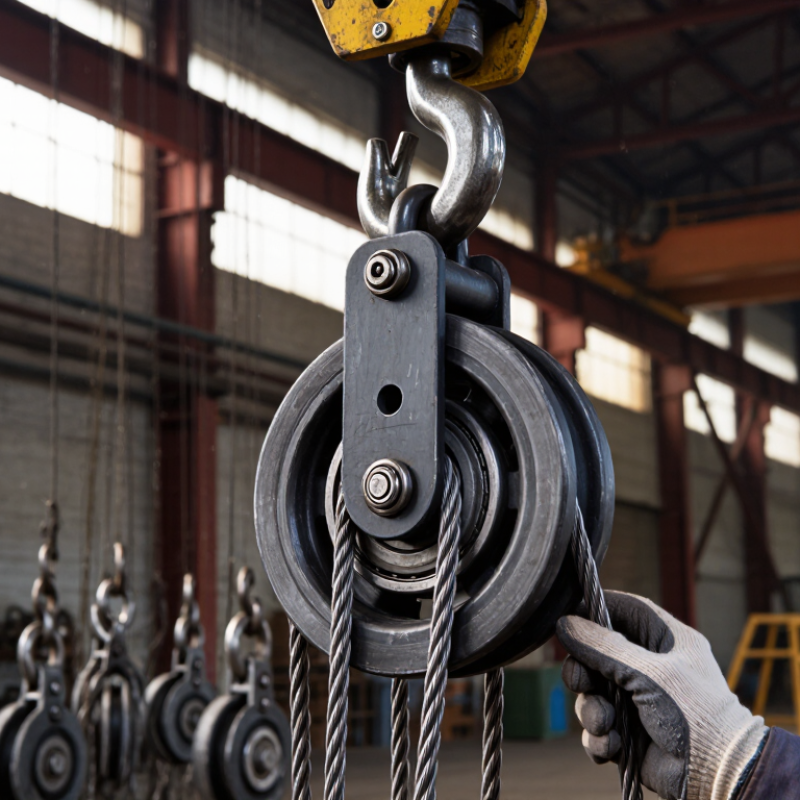
A lifting pulley works by guiding a rope or wire rope over a grooved wheel, called a sheave. The wheel turns as the line moves, redirecting the pull. A single fixed pulley has an ideal mechanical advantage of 1: it changes direction, but does not reduce the required force. With two rope sections supporting a moving load, the ideal advantage becomes 2:1, so the pulling force is roughly halved while more rope must be drawn.
That is the basic trade-off.
Real setups are less tidy. Friction at the sheave, poor alignment, and a rope that does not match the groove all increase effort and wear. Friction is real. Before choosing a block, count the supporting rope sections, then check the rated capacity of every component in the load path. The weakest part sets the practical limit. A common blind spot is treating mechanical advantage as a safety margin; it is not. OSHA’s construction rigging rule, 29 CFR 1926.251(a)(2), calls for inspection before each shift and during use as needed. Check for cracks, deformation, rope damage, and smooth sheave movement. Small faults matter.
Define the Load, Lift Height, and Working Conditions
Define the heaviest load before choosing a lifting pulley. Include the item, hooks, slings, and any attachments. Do not treat the pulley’s working load limit as a target to exceed. Check how the load will be reeved, because the arrangement affects line pull and the capacity required of each component.
A NIOSH review documented 632 crane-related deaths in the United States from 1992 to 2006. The review did not attribute these deaths to pulley failures specifically, but it underscores why load control and properly rated equipment matter.
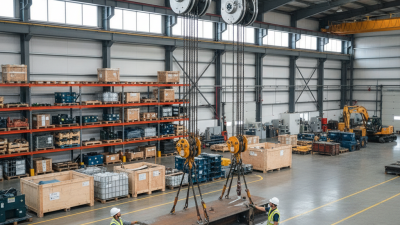
Measure the full lift height, then allow extra rope or chain for reeving, anchoring, and safe clearance at both ends. A lift that looks short on paper may need more travel once the hook block and load are included. Consider the actual worksite, too: dust can accelerate wear, moisture can promote corrosion, and outdoor wind can make a suspended load swing.
Check the pulley’s rated capacity, compatible rope or chain, inspection guidance, and operating limits against the site conditions. Details get missed. I would also verify the load estimate with the person responsible for the lift; estimates made by eye are easy to trust too much.
Compare Pulley Types, Materials, and Rated Capacities
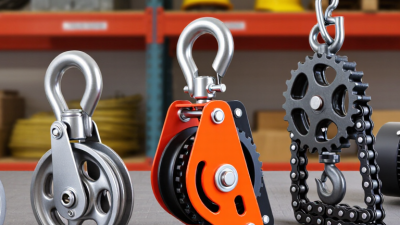
For a 2026 lifting setup, match the pulley type to the direction and frequency of the lift. A fixed pulley changes the pull direction; a movable pulley can reduce the effort required, while a block-and-tackle combines both. The trade-off is extra rope travel and friction. Check the rope or wire-rope diameter against the sheave groove, too. A poor fit can accelerate wear.
Material matters at the worksite. Steel handles demanding service but adds weight; aluminum is lighter, though abrasive grit can wear it faster. Stainless steel can suit corrosive environments, but it is not automatically the best choice. Check the tag. Compare the pulley’s working load limit with the loads of every connected component, and account for angled pulls and shock loading. ASME B30.26 covers rated-load identification for rigging hardware within its scope. OSHA’s construction rule, 29 CFR 1926.251(a)(4), requires certain custom lifting accessories to be proof-tested at 125% of rated load; that requirement does not apply to every pulley. I still double-check the full assembly rating, because a strong-looking sheave can hide a weak connection.
How to Choose the Best Lifting Pulley in 2026?
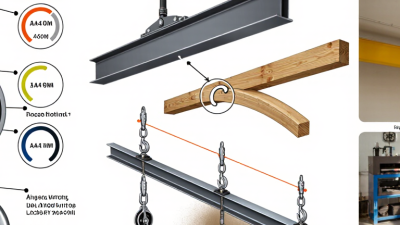
Compare pulley types, materials, and rated capacities. The chart shows ideal mechanical advantage—not a pulley’s rated capacity.
How to read it: A fixed pulley ideally provides a 1:1 mechanical advantage; a single movable pulley with two supporting rope parts provides 2:1; a compound arrangement with four supporting rope parts provides 4:1. Friction reduces real-world performance. Steel is commonly chosen for strength and durability, aluminum for lower weight, and stainless steel for corrosion resistance. These material descriptions do not determine a pulley’s capacity: check the manufacturer’s rated working load limit (WLL) for the exact product and configuration, and ensure every component and anchor is rated for the lift.
Check Safety Standards and Compatibility With Lifting Equipment
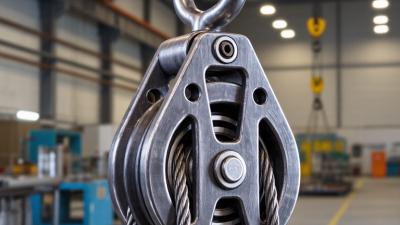
A lifting pulley is only as safe as its weakest connection. Check its marked working load limit, rope or wire-rope diameter, cheek-plate clearance, and attachment point. The complete assembly must suit the load and lifting method; a high-rated pulley does not make an undersized shackle safe. Confirm that the manufacturer’s instructions and applicable standards cover the pulley’s intended use. For rigging hardware, ASME B30.26 may be relevant, depending on the equipment and jurisdiction. Do not treat a standard marking as proof that every connected component is compatible.
Fit matters in the field. The rope should sit correctly in the sheave groove, move freely, and avoid rubbing against the frame. Inspect pins, bearings, and side plates for wear, cracks, distortion, or corrosion before use. Small details matter. The U.S. Bureau of Labor Statistics recorded 5,283 fatal work injuries in 2023; this figure covers all industries, not pulley-related incidents, but underscores why equipment checks deserve care. A useful check is to compare every component’s rated capacity and inspect the full load path. I would not rely on appearance alone: a pulley can look sturdy while its rating, rope fit, or connection remains unsuitable. When any marking is unreadable, pause and verify the specification rather than guessing.
Evaluate Maintenance Needs and Choose the Right Pulley for 2026
How to Choose the Best Lifting Pulley in 2026?
Maintenance should shape your pulley choice from the start. A sealed bearing can help keep out grit, while an accessible design may be easier to clean and inspect. Neither option suits every job. Consider how often the pulley will run, whether it faces rain or dust, and how easily a technician can reach it. Check the sheave groove for compatibility with the rope or cable, and confirm the rated load against the equipment specifications. Small details matter.
Look beyond the purchase price. A pulley that needs frequent lubrication may cost more in labor over time, especially on equipment used daily. Review the manufacturer’s maintenance instructions and keep a simple record of inspections, lubrication, and part changes. Look for rough rotation, unusual noise, cracks, corrosion, or a groove worn unevenly. Dust changes everything. Replace parts when wear reaches published limits, and ask a qualified technician to assess damage you cannot confidently judge. A clean-looking pulley can still have hidden wear.
Tips: Before choosing, note the operating environment, expected use, and available service access. Compare maintenance intervals, not just load ratings. If cleaning or inspection is difficult, that may be a real drawback. It is easy to overlook.



 +86-19862000127
 Phone
 Email