+86-19862000127


Why Is a Toothed Pulley Used in Machinery? The answer begins with controlled motion. A Toothed Pulley transfers rotary power through matching teeth and a toothed belt. This arrangement reduces slipping during operation. It also maintains a predictable speed relationship between the driving and driven shafts. In a packaging machine, for example, the pulley can synchronize a conveyor with a cutting blade. Even a small timing error may damage products or interrupt production.
Engineers choose a Toothed Pulley when accurate timing, compact construction, and efficient power transmission matter. Its teeth engage the belt grooves, unlike a smooth pulley that depends mainly on friction. This positive engagement supports reliable motion during starts, stops, and changing loads. It can also operate without frequent lubrication, which helps simplify routine maintenance. However, reliability depends on correct tension, alignment, tooth profile, and material selection. A poorly aligned pulley may create noise, uneven wear, or premature belt failure. Small details matter.
Real machinery rarely offers a perfect solution. Toothed systems may transmit vibration, and damaged teeth can cause sudden performance loss. Dust, heat, and excessive tension can shorten service life. For this reason, experienced technicians inspect belt edges, pulley grooves, and shaft alignment regularly. They also follow the manufacturer’s rated speed and load limits. The best choice depends on the application, not on the pulley alone. Understanding these practical limits explains why this component remains widely used in robotics, conveyors, printers, pumps, and automotive systems. It is simple, but not careless.
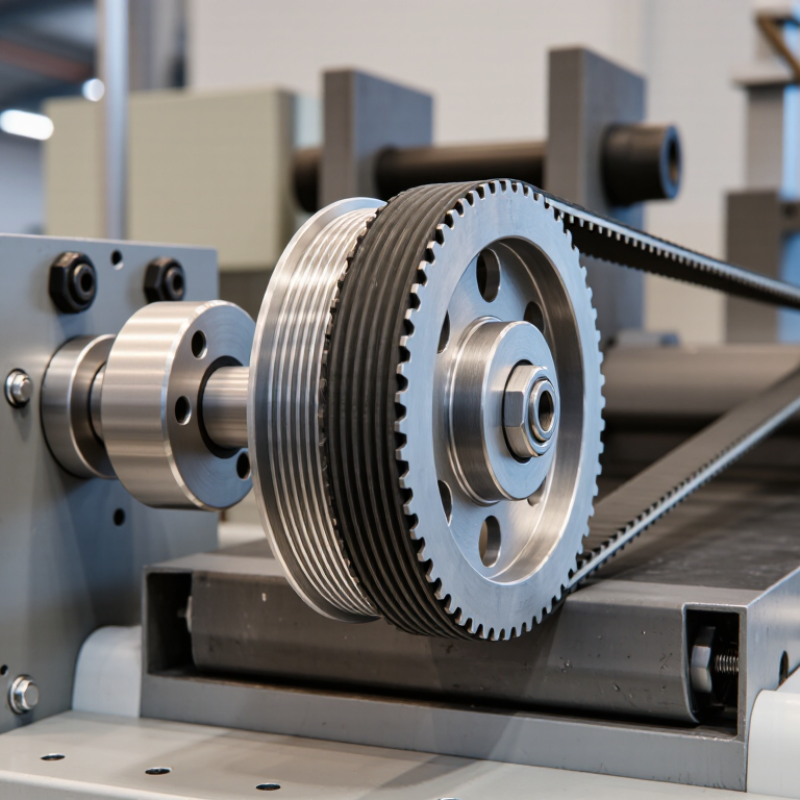
A toothed pulley, also called a timing pulley, transfers motion through teeth rather than friction alone. Its matching teeth engage with a toothed belt. This positive connection helps prevent slipping, even when the machine starts suddenly or carries changing loads. The pulley controls speed, direction, and rotational timing between shafts. In packaging equipment, for example, one missed tooth can shift a product several millimeters. That small error may damage alignment.
The design is simple, but selection requires care. Engineers check pitch, tooth profile, pulley diameter, belt width, shaft load, and operating temperature. A larger pulley usually reduces bending stress, while an undersized pulley can shorten belt life.
The U.S. Department of Energy reports that motor-driven systems consume about 23% of U.S. electricity and nearly 69% of industrial electricity. Efficient power transmission therefore matters beyond one component. Still, efficiency figures are not universal. Poor tension, contamination, or misalignment can erase expected gains. Theory is cleaner than the workshop.
Tips: Keep the pulley faces parallel. Set belt tension according to the manufacturer’s technical specification. Inspect tooth wear, edge fraying, and unusual vibration during scheduled maintenance. ISO 13050 provides terminology and dimensional guidance for synchronous belt drives, but field conditions still deserve judgment. A heavily loaded system may need a wider belt or a larger pulley. Do not assume a direct replacement will fit. Small differences in pitch can create loud noise, uneven motion, and premature failure.
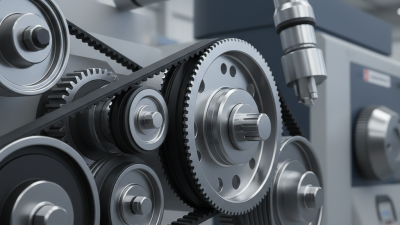
A toothed pulley transfers motion through a toothed belt whose internal teeth engage matching grooves. Unlike a smooth pulley, it relies on positive mechanical contact, not friction alone. As the driving pulley rotates, each tooth pushes against a belt tooth and carries force around the pitch circle. The belt then moves the driven pulley at a closely controlled speed. No surface skating. Accurate timing matters.
In machinery, this arrangement supports synchronized shafts, indexing systems, conveyors, and compact motion controls. The tooth profile distributes load across several contact points, while proper tension keeps the belt seated. A technician checks alignment with straight edges, then examines tooth wear, cracking, and unusual dust near the pulley. Too much tension can damage bearings; too little can cause tooth jumping during sudden torque changes. That detail is easy to miss.
The phrase “without slipping” needs care. A toothed drive can still skip when overloaded, poorly aligned, contaminated, or worn. Engineers select pitch, width, material, and pulley size for the expected torque and speed. They also allow for temperature changes and installation tolerances. This claim is useful, but incomplete. Teeth prevent ordinary slip, while careful maintenance limits avoidable surprises.
A toothed pulley keeps machinery moving in a controlled rhythm. Its teeth engage with a matching belt, preventing unwanted slipping during rotation. This connection matters when several shafts must move together. A small timing error can shift a cutting tool, misplace a package, or weaken an assembly. In production work, minor alignment errors can create noticeable vibration. Timing is not an abstract idea. It appears in every repeated movement.
Tips: Check belt tension, tooth wear, and pulley alignment during scheduled maintenance. Keep the belt clean and dry. Measure unusual noise before increasing speed. Replace damaged parts promptly, even when the machine still runs. Do not rely only on visual checks. A simple timing mark or measured run can reveal gradual drift.
Toothed pulleys also support repeatable positioning. They transfer motion with a predictable ratio, based on tooth counts and pulley sizes. Engineers use this relationship to coordinate conveyors, feeders, sensors, and rotating tools.
However, perfect timing is not automatic. Incorrect tension may overload bearings, while poor alignment can wear one belt edge. Temperature, dust, and repeated starts also affect performance. That is where practical judgment matters. Maintenance records should include operating conditions, not only replacement dates. A “working” machine may already be compensating for a hidden problem. Careful inspection can catch it earlier.
Why Is a Toothed Pulley Used in Machinery?
Toothed pulleys transfer motion through positive engagement, not friction alone. Their teeth lock into matching belt profiles and prevent normal slip. This feature keeps shafts synchronized during indexing, packaging, printing, and robotic movement. It also supports accurate speed ratios, even when the load changes quickly.
Key Advantages of Toothed Pulleys in Mechanical Systems
A toothed pulley can deliver repeatable positioning with less maintenance than many chain systems. It needs no lubrication, which helps keep dust and oil away from nearby products. The U.S. Department of Energy’s motor-system guidance reports that properly selected belt drives can approach 95% efficiency. However, efficiency depends on tension, alignment, tooth profile, and operating temperature. A small pulley misalignment may create edge wear, vibration, and premature tooth failure. I have seen systems lose timing after weeks of unnoticed tension loss. That assumption can fail.
Tips: Check pulley alignment with a straightedge before commissioning. Measure belt tension with a suitable gauge, not by finger pressure. Keep the pulley clean and inspect tooth flanks for polishing or cracks. ISO 13050 provides terminology and dimensional guidance for synchronous belt drives, making it useful during component selection. Choose a wider belt for higher torque, but do not oversize it blindly. Excess stiffness can increase bearing loads and noise. Testing under real acceleration is still necessary.
A toothed pulley, also called a timing pulley, transmits motion through positive engagement between pulley teeth and a matching toothed belt. This design is used when accurate synchronization, repeatable positioning, and reliable power transmission are required.
| Engineering Dimension | Typical Toothed-Pulley Performance | Comparison With a Smooth Friction Pulley | Practical Advantage in Machinery |
|---|---|---|---|
| Power Transmission Principle | Positive tooth-to-belt engagement | Smooth pulleys depend mainly on friction and belt tension | Maintains synchronized motion without relying solely on frictional contact |
| Slip During Normal Operation | Effectively zero slip when the belt remains correctly engaged | Slip can occur when friction is insufficient, especially during acceleration or overload | Improves repeatability in indexing, feeding, robotics, and automated positioning |
| Speed-Ratio Accuracy | Determined by the tooth-count ratio | The actual ratio may vary because of elastic slip and belt creep | Provides a predictable relationship between driving and driven shafts |
| Typical Mechanical Efficiency | Approximately 95%–98% in properly selected systems | Often approximately 90%–97%, depending on tension, belt material, and surface condition | Transfers a high proportion of input power while limiting energy loss |
| Torque Transmission | Suitable for moderate to high torque when tooth capacity and belt width are correctly selected | Torque capacity is limited by friction, wrap angle, and the possibility of belt slip | Reduces the need for excessive belt tension and lowers radial load on shafts and bearings |
| Synchronization Capability | High; multiple shafts can be synchronized through fixed tooth relationships | Limited; timing can change if the belt slips or tension changes | Useful for coordinated conveyor drives, printing mechanisms, pumps, and robotic axes |
| Backlash and Positioning | Low backlash is achievable with suitable tooth profiles, tension, and alignment | Positioning accuracy is more affected by slip and belt elasticity | Supports accurate indexing and controlled start-stop movement |
| Lubrication Requirement | Normally operates without oil or grease | Also generally operates without lubrication, but may require higher tension for torque transfer | Provides clean operation and avoids lubricant contamination in many applications |
| Operating Noise | Moderate; noise may increase with speed, tooth engagement frequency, misalignment, or inadequate tension | Often quieter at low speed because there is no tooth-meshing impact | Offers accurate transmission, while noise can be reduced through correct profile selection and installation |
| Alignment Sensitivity | Requires accurate parallel alignment and suitable flange or tracking control | May tolerate some conditions differently, but excessive misalignment still causes wear and tracking problems | Proper alignment improves tooth engagement, service life, and transmission reliability |
| Maintenance Requirement | Periodic inspection of tooth wear, belt tension, alignment, and contamination | Inspection focuses mainly on tension, surface wear, glazing, and slip-related heat | Predictable inspection criteria make preventive maintenance easier to schedule |
| Common Mechanical Applications | Conveyors, packaging machines, CNC mechanisms, robotics, textile equipment, and synchronized pumps | Suitable for applications where speed variation and occasional slip are acceptable | Provides dependable timing in systems where phase accuracy is more important than silent operation |
Note: Performance values are typical engineering ranges rather than guarantees. Actual results depend on belt material, tooth profile, pulley diameter, belt width, operating speed, torque, temperature, alignment, installation quality, and maintenance conditions.
A toothed pulley transfers motion through positive engagement between its teeth and a matching belt. It resists slipping during indexing, conveying, and synchronized rotation. This makes it useful in packaging machines, robotics, 3D printers, textile equipment, and automated inspection lines. Even a small timing error can damage a product or disturb machine calibration.
Selection starts with load, speed, and center distance. Engineers should also check belt pitch, tooth profile, pulley width, shaft diameter, and allowable tension. A larger pulley usually reduces bending stress, but it needs more installation space. For dusty or humid areas, material choice and sealing deserve close attention.
The U.S. Department of Energy reports that motor-driven systems can consume 50% to 70% of industrial electricity. Efficient power transmission therefore matters beyond simple motion control. The International Energy Agency also identifies electric motor systems as responsible for roughly half of global electricity use.
A first selection can look correct and still fail. Real operating conditions often differ from catalog calculations. Start-stop cycles, vibration, contamination, and poor alignment may shorten service life. Technicians should inspect tooth wear, belt edge damage, and abnormal noise during maintenance. ISO 5294 provides dimensional guidance for toothed belts and pulleys, but it cannot replace application testing. I would leave a reasonable safety margin, especially when shock loads are uncertain. Small pulleys may fit the drawing perfectly. They may still create excessive bending and heat. Field measurements should confirm the final design.