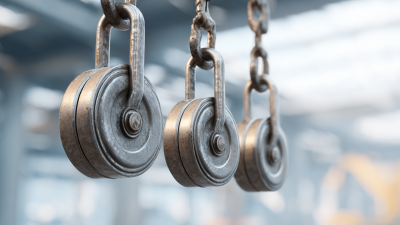
Top Pulley Trolley Manufacturers for Global Buyers?
Choosing a Pulley Trolley supplier is not a simple catalog exercise for global buyers. The right choice affects lifting control, operator safety, maintenance costs, and project timelines. A small workshop may need a compact trolley for occasional positioning. A shipyard may require heavy-duty equipment, sealed bearings, and reliable corrosion resistance. These applications are different.
The mechanical principle behind every trolley reaches back to Archimedes, an early authority on pulley mechanics. He reportedly said, “Give me a place to stand, and I will move the Earth.” The quote sounds dramatic, but it highlights a practical truth. Mechanical advantage only works when the supporting structure is suitable. A trolley needs the same discipline.
This guide examines leading manufacturers through useful buyer criteria. These include rated capacity, beam compatibility, wheel design, braking performance, material quality, inspection records, and replacement-part support. Certifications matter, but they should not replace technical verification. Buyers should compare test reports, user manuals, factory experience, and service responsiveness.
Look closely at the details.
A polished website proves little. A higher load rating may also hide limitations under angled loading, frequent movement, or harsh environments. I have found that product photographs rarely reveal bearing protection or machining quality. That weakness deserves attention. Global sourcing also brings language barriers, delivery delays, and different regional requirements. No manufacturer is perfect. Careful buyers should request drawings, dimensional checks, warranty terms, and application advice before placing an order. This introduction provides a practical path for comparing Pulley Trolley manufacturers with greater confidence and fewer expensive surprises.
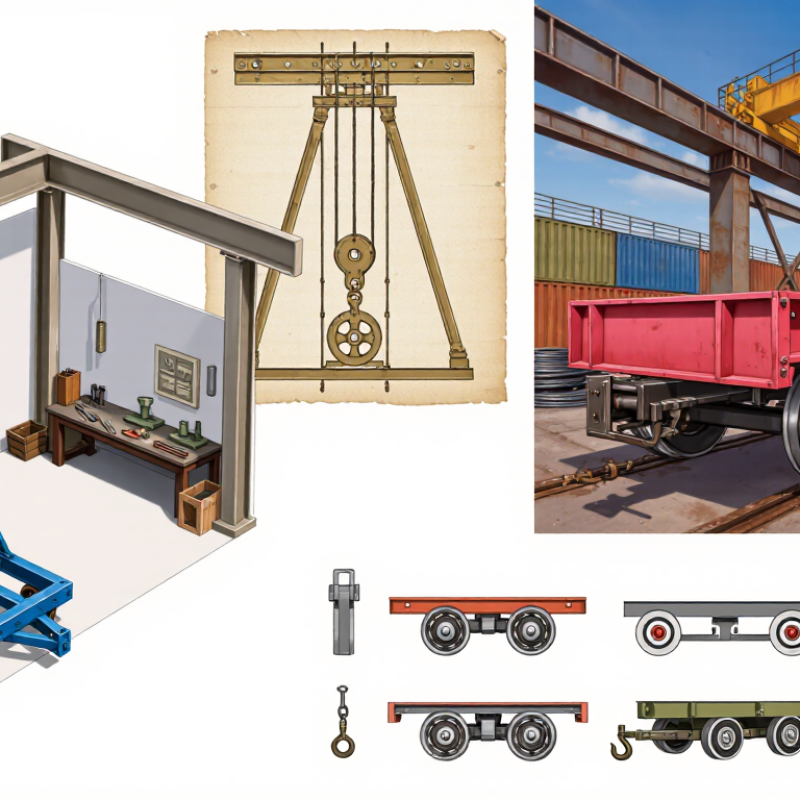
Pulley Trolley Fundamentals: Designs, Parts, and 1–10 t Load Ratings
Pulley trolley selection starts with the beam, not the advertised capacity. Plain trolleys suit short, occasional moves, while geared designs provide better control over longer travel. Electric versions reduce manual effort but require more inspection points. Common parts include side plates, flanged wheels, axles, bearings, spacers, and a central suspension pin.
A 1–10 t rating describes the permitted working load under stated conditions. It does not guarantee safe operation on every beam. Wheel spacing must match flange width, thickness, and beam profile. A narrow flange can create poor tracking and uneven wheel pressure.
ASME B30.16 requires rated-load marking and inspection controls for below-the-hook lifting devices. ISO 4309 also emphasizes systematic inspection of lifting equipment components.
For a 1 t trolley, compact wheels and lighter side plates often improve portability.
At 5 t, axle strength, bearing selection, and side-plate stiffness become more important.
A 10 t unit needs careful load distribution and verified beam compatibility.
Industry safety guidance commonly separates visual checks, functional tests, and periodic examinations. That distinction is practical, though often overlooked.
Manufacturers serving global buyers should publish test loads, working-load limits, wheel dimensions, and operating temperatures. Certification alone is not enough. I would also request a drawing showing the minimum and maximum flange widths. Small omissions here can cause expensive delays. Even experienced buyers sometimes compare tonnes first and geometry later. That habit needs reconsideration.
Global Manufacturer Comparison: ISO 4301 Duty Classes and Product Ranges
Top Pulley Trolley Manufacturers for Global Buyers?
Global Manufacturer Comparison: ISO 4301 Duty Classes and Product Ranges
Global buyers should compare pulley trolley manufacturers through duty class, not price alone. ISO 4301 links crane and mechanism categories to load spectrum and operating cycles. Mechanism classes commonly range from M1 to M8, while crane groups may range from A1 to A8. Higher classes generally indicate more demanding service, but the exact selection depends on travel frequency, lifted loads, and working hours.
A practical product range may include manual push trolleys, geared trolleys, electric trolleys, adjustable-flange models, and low-headroom units. Buyers should check safe working load, beam flange width, wheel material, travel speed, and brake performance. A trolley rated for 5 tonnes may still be unsuitable for frequent shock loading. That detail is often missed.
Ask manufacturers for load-spectrum calculations, dimensional drawings, inspection records, and material certificates. Confirm whether testing follows the stated ISO 4301 classification and applicable local requirements. Corrosion protection also matters in ports, food plants, and humid workshops. Painted steel may work indoors, while galvanized or coated components can offer better protection outdoors.
Catalogs rarely show the whole picture. Installation alignment, wheel contact, and maintenance access can change service life considerably. I would compare spare-part availability and technical response times before placing a large order. A lower purchase price can become expensive when replacement wheels or brake parts are difficult to source.
Safety and Compliance: ASME B30.16, EN 13157, and CE Requirements
For global buyers, pulley trolley manufacturers should be evaluated beyond price and lifting capacity. Safety compliance begins with the intended application, not the catalog page. ASME B30.16 provides guidance for overhead hoist operation, inspection, maintenance, and safe working practices. It is not a product certificate by itself. Buyers should request load ratings, inspection procedures, test records, and clear operating limits.
EN 13157 applies to manually powered lifting equipment, including many hand-operated trolley and hoist systems. Check whether the complete assembly, rather than one component, has been assessed. CE requirements also demand careful review of risk assessment, technical documentation, instructions, and the Declaration of Conformity. The CE mark should match the actual product configuration. A familiar-looking label proves very little. Beam width, flange shape, wheel material, brake performance, and rated load must be verified together.
Tips: Ask for serial-number traceability and recent test evidence. Confirm the trolley suits the real beam, including painted surfaces and uneven flanges. Keep inspection records at the installation site. Do not rely only on supplier drawings; site measurements can expose uncomfortable differences. A pre-shipment check is useful, but it cannot replace competent installation and periodic inspection. Even experienced buyers miss small details, especially when several standards appear on one quotation. That is why compliance should be reviewed by a qualified lifting professional before purchase and commissioning.
Safety and Compliance Frameworks for Pulley Trolleys and Hoists
This chart maps the primary compliance functions covered by ASME B30.16, EN 13157, and CE conformity requirements. A value of 1 indicates that the framework directly addresses the category; 0 indicates that the category is normally governed by another standard, regulation, or company procedure. CE is a conformity-marking process rather than a product safety standard.
Supplier Selection by Region: Quality Audits, Lead Times, and After-Sales Support
Regional supplier selection for pulley trolleys should begin with evidence, not attractive quotations. The World Bank’s 2023 Logistics Performance Index assessed 139 economies across customs, infrastructure, and shipment timeliness. Use those benchmarks when comparing suppliers in Asia, Europe, and North America. Request recent audit records, material certificates, batch traceability, and documented load-testing procedures. A factory visit should include production-floor checks, not only a conference-room presentation.
Lead times need practical testing. UNCTAD’s Review of Maritime Transport reports that shipping carries over 80% of global trade by volume, so port congestion can quickly affect delivery promises. Ask for production capacity, export history, buffer stock, and alternative transport plans. European suppliers may offer shorter regional transit, while Asian suppliers can provide broader production capacity. This is not universal. Local holidays, port access, and customs performance can change the result.
Tips: Build a regional scorecard. Give quality audits 40%, lead times 30%, and after-sales support 30%. Require a written response-time commitment for failures, replacement-part availability, and installation guidance. A perfect audit score can still mislead; one overlooked subcontractor may weaken consistency. I would also test a small pilot order before approving volume purchasing. That step costs more initially, but it reveals packaging damage, documentation gaps, and communication delays.



 +86-19862000127
 Phone
Phone Email
Email