Top Lifting Pulley Types and Their Uses Explained
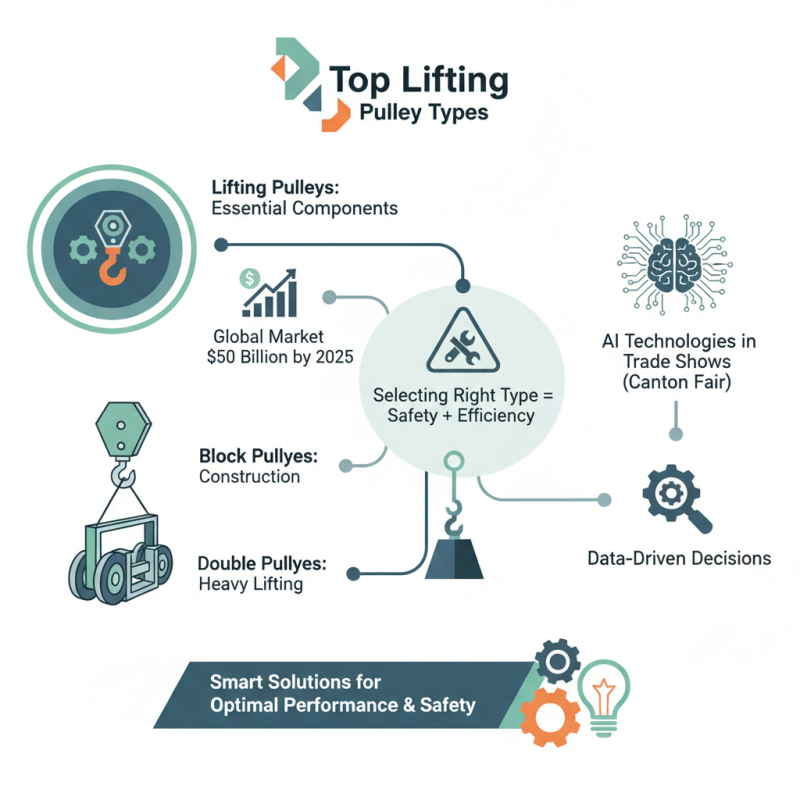
Lifting pulleys are essential components in various industries, facilitating the lifting and moving of heavy loads. According to recent industry reports, the global lifting equipment market is projected to reach $50 billion by 2025, driven by advancements in technology and increased construction activities. Lifting pulleys play a crucial role in this growth, aiding in efficiency and safety.
These devices come in various types, each designed for specific applications. For example, block pulleys are widely used in construction, while double pulleys are preferred for heavy lifting tasks. However, users often overlook the importance of selecting the right type of pulley for their needs, which can lead to safety risks and operational inefficiencies.
With the introduction of AI technologies in trade shows like the upcoming Canton Fair, professionals can now leverage data to make informed decisions regarding lifting equipment. As industries evolve, understanding the nuances of lifting pulleys will become increasingly vital for ensuring optimal performance and safety in material handling. Reflecting on the integration of smart solutions can provide insights into further improving operational efficiency.
Introduction to Lifting Pulleys and Their Importance
Lifting pulleys play a crucial role in various industries. They help in lifting heavy loads with ease and efficiency. Their design allows for the distribution of weight, reducing strain on workers. This is essential in construction sites, warehouses, and even in home settings.
Understanding the types of lifting pulleys is important. Fixed pulleys can change the direction of force, while movable pulleys reduce the amount of force needed. Block and tackle systems further multiply lifting power, but they require careful setup. Mistakes in placement can lead to accidents.
In practice, using lifting pulleys requires attention. Operators must be cautious of their limits. Not every pulley suits every job. It's vital to choose the right type for specific tasks. Failure to do so can result in inefficiency or, worse, injuries. Each lift teaches a lesson about safety and preparation.
Top Lifting Pulley Types and Their Uses
This chart illustrates the various types of lifting pulleys and their common applications. Understanding these types can help in making informed decisions for lifting tasks in different industries.
Various Types of Lifting Pulleys and Their Functionalities
Lifting pulleys come in various types, each designed for specific tasks. Fixed pulleys are among the most common. They support heavy loads by changing the direction of force, allowing for easier lifting. According to engineering reports, using a fixed pulley can reduce required lifting force by nearly 50%. This type is ideal for scenarios where heavy weights need to be hoisted vertically.
Another popular type is the movable pulley. This design allows the pulley to move with the load. It significantly lowers the effort needed to lift objects. Industry data indicates that a movable pulley can reduce the lifting force by up to 75%. However, users must be careful. The setup might be complicated, requiring more space and protective measures against potential accidents.
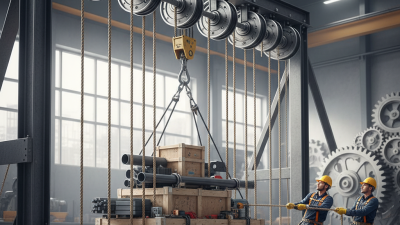
Block and tackle systems combine multiple pulleys. They enhance mechanical advantage significantly but demand precise setup. Reports show these systems can multiply force input by as much as eight times. Yet, power loss through friction is a concern. Users must regularly inspect equipment to ensure safety and efficiency. Neglecting maintenance could lead to failures in a tense moment, potentially causing accidents or delays.
Common Applications of Lifting Pulleys in Different Industries
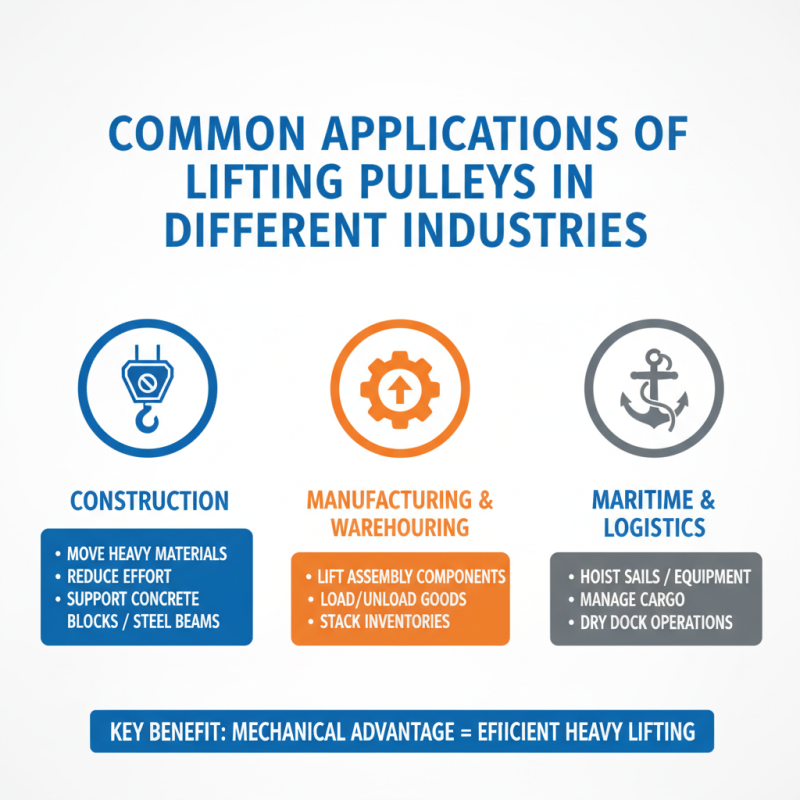
Lifting pulleys are widely used across many industries. In construction, they help move heavy materials. These pulleys reduce the effort required to lift items. For example, they can support concrete blocks or steel beams during building projects. Workers can efficiently move loads upwards thanks to the mechanical advantage pulleys provide.
In the manufacturing sector, pulleys play a crucial role in assembly lines. They facilitate the movement of goods between different stations. This system improves productivity and reduces strain on workers. However, improper use can lead to accidents. Regular maintenance and proper training are essential. Without them, the risk increases significantly.
In the shipping industry, pulleys are vital for loading and unloading cargo. They enable cranes to lift containers from ships. This process helps ensure timely deliveries. Still, there's room for improvement. Many companies overlook safety measures. Investing in safety training could enhance operational efficiency. It might seem simple, but these small steps matter greatly.
Key Factors to Consider When Selecting a Lifting Pulley
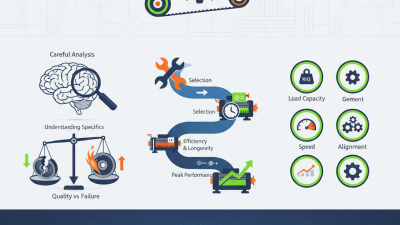
When selecting a lifting pulley, several key factors come into play. The weight capacity is crucial. Different pulleys handle different loads. It is essential to choose one that accommodates the heaviest item you need to lift. A pulley rated for too little weight can fail, leading to accidents.
Another critical factor is the material. Pulleys come in various materials such as steel, aluminum, and plastic. Each has its benefits and drawbacks. Steel is strong but can be heavy. Aluminum offers strength with less weight but may not be as durable. Plastic is lightweight and resistant to corrosion, but is not suitable for very heavy loads.
You should also consider the pulley size and design. A smaller pulley may be easier to handle but could limit your lifting capabilities. Ensure that the design matches the specific tasks you plan to undertake. Pay attention to the wheel design and the shape of the grooves. Each design serves a different purpose. Don't overlook the importance of these details. A well-chosen pulley can simplify your lifting tasks. Yet, a poor choice may lead to inefficiency or even hazards.
Top Lifting Pulley Types and Their Uses Explained
| Pulley Type |
Description |
Common Uses |
Weight Capacity |
| Block Pulley |
Consists of one or more grooved wheels. |
Construction, sailing, lifting heavy items. |
Up to 10 tons |
| Sheave Pulley |
A single or multi-wheel setup to redirect force. |
Elevators, cranes, power transmission. |
Varies widely; often 1-5 tons |
| Fixed Pulley |
Remains stationary; changes direction of force. |
Simple lifting tasks, flagpoles. |
Up to 1 ton |
| Moveable Pulley |
Moves with the load, reducing required input force. |
Construction, industrial lifting. |
Up to 3 tons |
| Compound Pulley |
Combines fixed and moveable pulleys for increased efficiency. |
Heavy lifting, logistics. |
Up to 20 tons |
Maintenance and Safety Tips for Using Lifting Pulleys
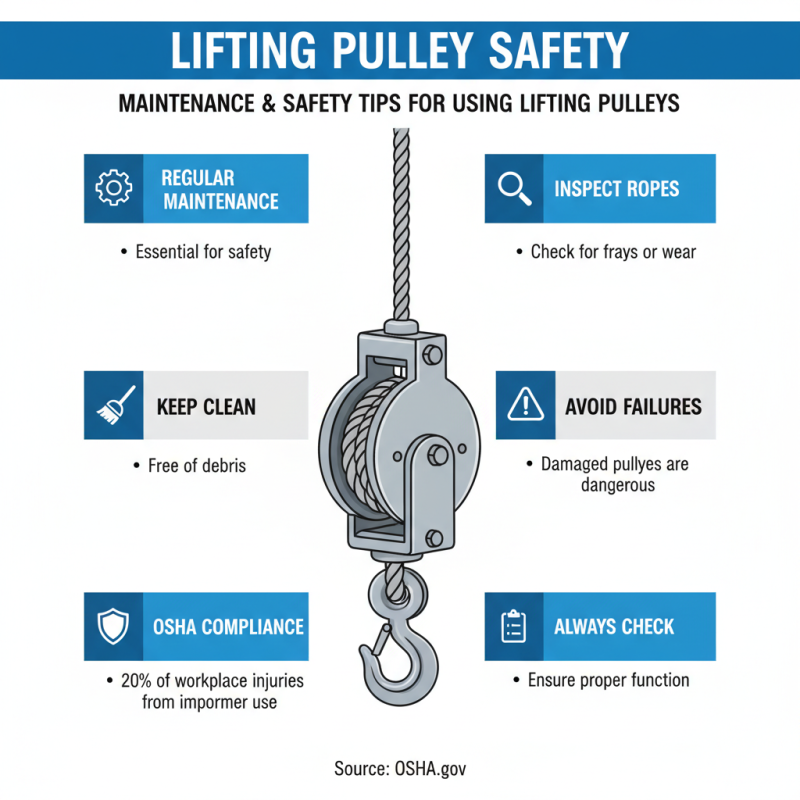
Using lifting pulleys can enhance efficiency in various industries, but safety is paramount. According to OSHA, improper use of lifting equipment accounts for over 20% of workplace injuries. Regular maintenance checks are essential. Inspect the ropes for frays or wear. Always ensure pulleys are clean and free of debris. A damaged pulley can lead to catastrophic failures.
Training is crucial. No one should operate lifting equipment without proper knowledge. In a 2021 report by the National Safety Council, 40% of lifting accidents involved untrained personnel. Small lapses in judgment can result in severe injuries. Always follow manufacturer's guidelines for load limits. A pulley’s rating is not a suggestion; it’s a directive.
Be aware of environmental factors. Wet or icy conditions can increase risks significantly. If using pulleys outdoors, consider the weather conditions beforehand. Assess the load thoroughly. Underestimating it can cause accidents. Each lift should be treated with respect. Rushing could lead to mistakes, and mistakes can be costly. Awareness of the surrounding area is also vital during operation.



 +86-19862000127
 Phone
Phone Email
Email