What is a T5 Belt Pulley and How Does It Work?
The T5 Belt Pulley is a vital component in many mechanical systems. It plays a significant role in power transmission. Industry reports indicate that the efficiency of belt drive systems can reach up to 95%. However, not all pulleys meet this benchmark.
In applications ranging from automotive to industrial machinery, the T5 Belt Pulley demonstrates its effectiveness. Its design allows for smooth operation and minimal slippage. When properly maintained, it can enhance the performance of the entire system. Yet, many users overlook regular checks, leading to potential inefficiencies or failures.
Understanding how a T5 Belt Pulley works can help manufacturers optimize their equipment. With the right insights, operators can improve reliability and reduce downtime. More knowledge leads to better choices—this is crucial for long-term success. Embracing this knowledge is important, but often neglected. Exploring the T5 Belt Pulley is not just about mechanics; it's about understanding your machinery thoroughly.
What is a T5 Belt Pulley?
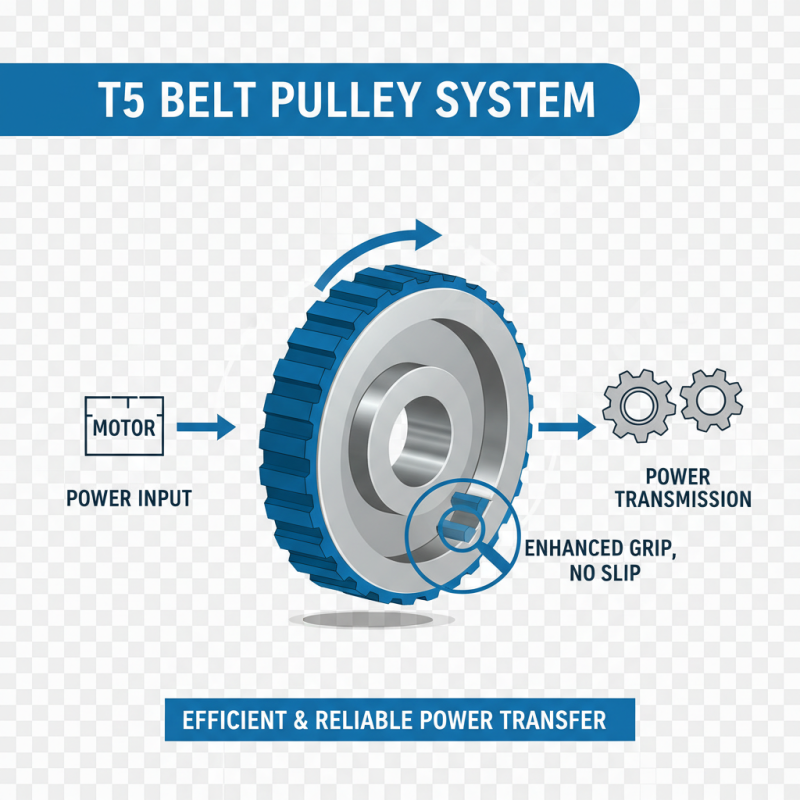
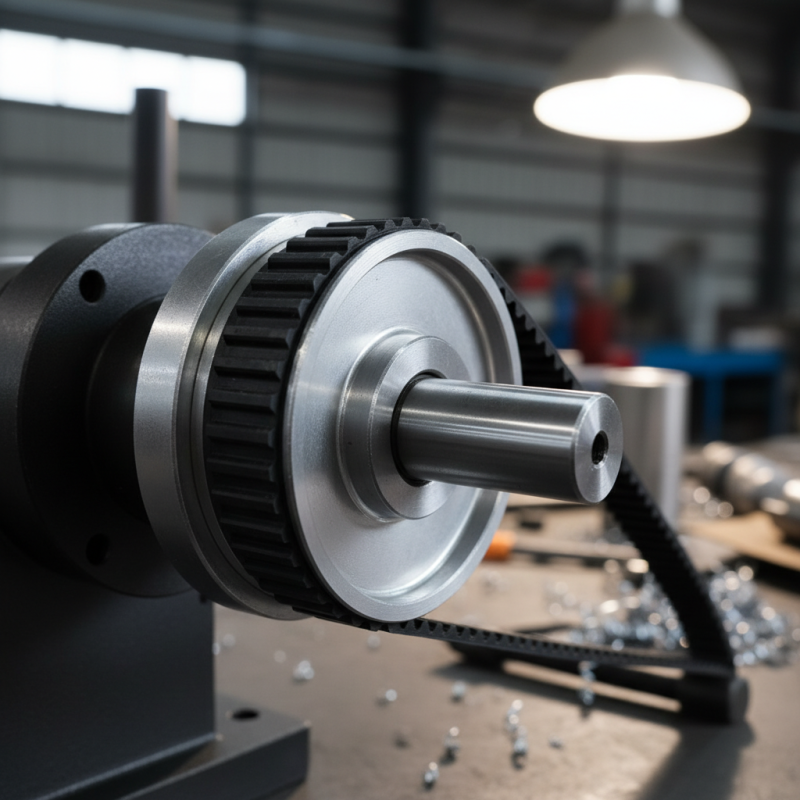
A T5 belt pulley is a mechanical component essential in various power transmission systems. It interacts with a T5 timing belt, which features specific teeth designed for precise movements. This pulley ensures that the rotation of one wheel translates effectively to another, allowing for smooth operation in machinery.
The design of a T5 belt pulley is functional yet straightforward. It typically has a central hub with a series of teeth around the outer edge. These teeth engage with the T5 belt, creating a tight grip without slipping. It’s vital for applications where timing and synchronization are critical, such as in automotive and industrial machines. Precision in manufacturing is crucial; a minor defect can lead to significant operational issues.
One might overlook the importance of proper alignment during installation. Misalignment can lead to uneven wear on both the pulley and belt. Regular maintenance checks are necessary to ensure longevity. Neglecting these practices can result in operational inefficiencies and higher replacement costs down the line. Reflecting on these details reveals how nuanced the function of a T5 belt pulley is in mechanical systems.
T5 Belt Pulley Efficiency Comparison
This chart illustrates the efficiency of a T5 belt pulley under different load conditions. The data shows that the efficiency peaks at medium to high load conditions, demonstrating optimal performance for these ranges.
Design and Construction of T5 Belt Pulleys
The T5 belt pulley is crucial in mechanical systems. Its design focuses on efficient power transfer. The pulley shape is often circular, allowing the belt to grip firmly. T5 pulleys typically have a width that accommodates standard T5 belts. This design helps reduce slippage and wear.
Construction materials often include aluminum or high-strength plastic. These choices offer durability while minimizing weight. The surface finish matters too. A smooth surface reduces friction, enhancing performance. Some designs include integrated keyways for secure attachment. This ensures that the pulley remains in place during operation.
Many users overlook the importance of precise alignment. Misaligned pulleys can lead to premature wear. The tension of the belt is another factor. Too loose or too tight can affect performance. Regular maintenance helps identify potential issues early. Knowing these details can lead to better efficiency and longer life for T5 belt pulleys.
What is a T5 Belt Pulley and How Does It Work? - Design and Construction of T5 Belt Pulleys
| Dimension |
Measurement (mm) |
Material |
Application |
| Bore Diameter |
10 |
Steel |
Industrial Equipment |
| Outer Diameter |
50 |
Aluminum |
Conveyor Systems |
| Width |
20 |
Plastic |
Textile Machinery |
| Weight |
0.5 |
Cast Iron |
Agricultural Machines |
Key Applications of T5 Belt Pulleys in Machinery
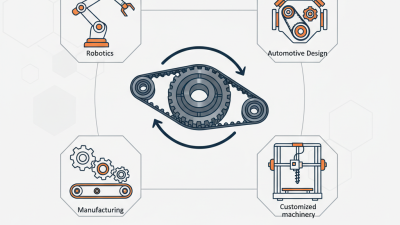
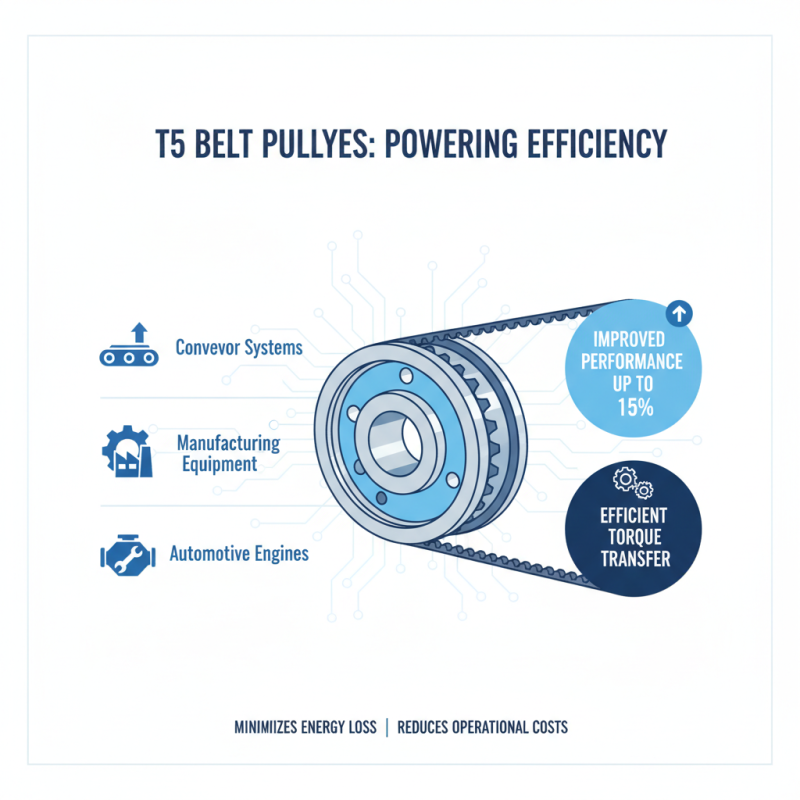
T5 belt pulleys play a crucial role in various machinery applications. These components are essential for power transmission in conveyor systems, manufacturing equipment, and automotive engines. Their design allows for efficient torque transfer, minimizing energy loss. According to industry reports, T5 pulleys can improve performance by up to 15% compared to standard pulleys. This efficiency is vital in sectors where energy consumption directly impacts operational costs.
In conveyor systems, T5 pulleys ensure that materials move efficiently. They are widely used in production lines for packaging and assembly. The precise fit of T5 belts on these pulleys reduces slippage, which can lead to wear over time. Some studies show that the right pulley design can enhance the lifespan of belts by 20%. However, improper installation can negate these benefits and lead to premature failure.
The automotive industry also relies heavily on T5 belt pulleys. They are commonly found in engine systems, helping to control timing and power distribution. Misalignment in these pulleys can result in significant performance loss or even engine damage. According to engineering surveys, over 30% of maintenance issues in automotive applications are linked to belt pulley misalignments. Recognizing these potential pitfalls is essential for ensuring operational efficiency.
How T5 Belt Pulleys Function in Power Transmission
T5 belt pulleys are essential components in many mechanical systems. They work primarily through a simple design that ensures efficient power transmission. The belt fits snugly into the grooves of the pulley. This design allows for a more substantial grip without slipping. As the motor turns the pulley, it transmits power to other components in the machinery.
In power transmission, T5 pulleys play a vital role. They help convert rotational energy into usable work. With each turn, the belt transfers the energy seamlessly. This mechanism is critical in applications like conveyor systems or industrial machines. However, users often overlook the importance of proper tension. If the belt is too loose or too tight, it can lead to wear and reduced efficiency. Maintaining the right balance is challenging but necessary for optimal performance.
Additionally, environmental factors can impact the functionality of T5 pulleys. Dust, debris, and temperature changes can all affect performance. Regular maintenance and checking for wear can help mitigate these issues. Users must also consider the material of the belt and pulley. Sometimes, the wrong choice can lead to premature failures. The journey toward finding the perfect setup is often filled with trial and error.
Maintenance Tips for T5 Belt Pulleys
T5 belt pulleys play a crucial role in power transmission systems. Proper maintenance ensures their longevity and efficiency. Regular checks are vital. Look for signs of wear such as cracking or fraying. These issues can lead to more significant problems later. Keeping the pulleys clean helps them function better. Accumulated dirt can cause misalignment.
Lubrication is another essential task. Use the right type of lubricant to avoid damage. Over-lubricating can attract dirt, while under-lubricating leads to increased friction. Keep an eye on the belt tension as well. Too much tension can strain the pulley. Too little can cause slippage.
It might be easy to overlook these maintenance steps. However, neglect can result in costly repairs. Ignoring small problems tends to escalate. Regular maintenance checks don’t take much time but can save you in the long run. Always remember, prevention is better than repair. Keep your T5 belt pulleys in check to ensure smooth operation.



 +86-19862000127
 Phone
Phone Email
Email