How to Choose the Right Resistant Belt?
Choosing the right Resistant Belt begins with purpose, not color or advertised strength. A rehabilitation user may need gentle, consistent tension, while an experienced athlete may require heavier resistance and greater durability. The American College of Sports Medicine’s 2024 Worldwide Survey of Fitness Trends keeps strength training among the leading global priorities. That trend reflects a practical reality: compact resistance equipment is increasingly used at home, in clinics, and during travel. Yet popularity can create confusion. More resistance does not automatically mean better training.
Dr. Cedric X. Bryant, ACE’s chief science officer, has emphasized, “Resistance training is for everyone, but the program must match the person.” That principle applies directly to Resistant Belt selection. Check the belt’s measured resistance range, fabric quality, stitching, grip comfort, and adjustment system. A belt that rolls against the waist or pinches the skin will probably remain unused. Small details matter. The best choice should support controlled movement through the intended range, without forcing compensation.
Research published in the Journal of Strength and Conditioning Research has found elastic resistance can produce meaningful strength improvements when exercises are programmed appropriately. Still, resistance changes as the belt stretches, and product labels are not always standardized. This is where buyers must think carefully. Marketing claims may sound precise, but independent testing is uncommon. A sensible guide should compare tension, fit, safety features, user experience, and training goals. The perfect belt may not exist. The right one is the belt you can control, inspect, and use consistently.
Define Resistance Belts by Material, Load Range, and Intended Use
How to Choose the Right Resistant Belt?
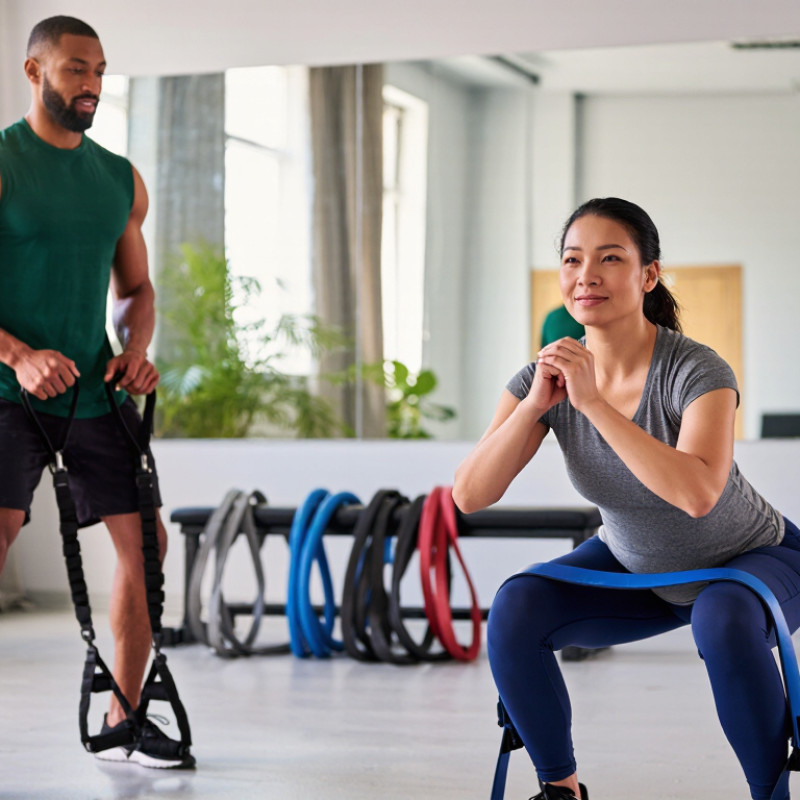
Define resistance belts by material, load range, and intended use. Material affects comfort, durability, and control. Natural latex offers smooth tension and strong elasticity. It may, however, irritate sensitive skin or weaken under heat and sunlight. Fabric belts feel softer against the body. They usually provide steadier resistance, but their stretch can feel limited.
Load range matters more than appearance. A light belt suits warm-ups, mobility drills, and beginners. Medium resistance supports squats, rows, and controlled rehabilitation exercises. Heavy resistance demands stronger form and stable joints. Do not choose the strongest belt immediately. It can shorten your movement and encourage poor technique. I have found that a moderate belt often creates better control, even when progress feels slower.
Tips: Check the belt for cracks, thinning, or loose stitching before use. Test the tension gradually. Keep your movements slow and your posture neutral. Match the belt to the exercise, not your ego. For outdoor training, store it away from direct sunlight and extreme temperatures. A belt can look reliable while hiding small damage. Replace it when resistance feels uneven. If pain appears, stop and reassess the material, load, and intended use. A qualified trainer or healthcare professional can help when previous injuries affect your choice.
How to Choose the Right Resistance Band?
Compare common resistance-band materials and formats by their typical working load at approximately 100% elongation. Actual resistance changes with stretch length, temperature, band age, and construction.
Natural latex generally offers a wide stretch range and is suitable for strength training, mobility, and rehabilitation when latex sensitivity is not a concern. TPE is a practical latex-free option for lighter rehabilitation and mobility work. Fabric bands provide limited stretch and stable lateral resistance, making them useful for hip activation and lower-body exercises. Select a band whose working load allows controlled movement through the full exercise range.
Compare Latex and Fabric Belts for Elasticity, Durability, and Skin Comfort
Latex and fabric resistance belts behave differently under tension. Latex usually offers smoother elongation and stronger recoil, making it useful for progressive strength work. ASTM D412 testing measures tensile strength and elongation, and many latex products reach roughly 200–300% stretch. Check the test conditions, though. A higher number does not always mean better training control.
Fabric belts feel less slippery against bare skin. Their woven surface can stay stable around thighs during squats, walks, or glute exercises. However, fabric usually stretches less, so it may feel harder sooner. The American College of Sports Medicine’s 2024 fitness trends report shows continued demand for accessible strength training, where simple equipment and repeatable movement matter. In practice, a fabric belt may suit short sessions, while latex offers wider resistance changes.
Durability depends on sweat, sunlight, folding, and cleaning. Latex can crack or become tacky when stored hot, even if the first workout feels excellent. Fabric may resist surface wear better, but its stitching can loosen. Skin comfort needs attention. The American Latex Allergy Association notes that latex sensitivity affects a small but meaningful share of users, with estimates commonly placed around 1–6%. Try the belt briefly before longer sessions. I would not trust marketing claims alone. Inspect edges, seams, and odor after several uses. Pain, redness, or itching means the material deserves a second look.
Match Belt Resistance to Training Loads of 8–12 Repetitions
How to Choose the Right Resistant Belt?
Match Belt Resistance to Training Loads of 8–12 Repetitions
Choose a resistant belt that makes repetitions 8 through 12 challenging, not impossible. The final two repetitions should demand focus while your posture remains stable. If you finish twelve repetitions easily, the belt is probably too light. If your hips twist or your knees collapse before eight, reduce the resistance. Keep it controlled.
Resistance usually increases as the belt stretches. This changes the load across the movement. A squat may feel manageable at the bottom but much harder near standing. Test the belt with the exact exercise, not just a similar movement. Complete one trial set after warming up, then assess your breathing, joint position, and speed. Two clean repetitions should remain in reserve.
I have sometimes chosen a stronger belt because the first few repetitions felt easy. That judgment was incomplete. The last repetitions exposed poor control and shortened range of motion. A moderate belt often supports better training quality. It also makes progress easier to measure. Record the belt length, exercise, and completed repetitions. Recheck these details after several sessions, because fatigue, technique, and stretching position can change the effective load. A small adjustment may be enough.
How to Choose the Right Resistant Belt? - Match Belt Resistance to Training Loads of 8–12 Repetitions
| Resistance Level |
Typical Force at 100% Stretch |
Approximate Force Range |
Best Starting Load for 8–12 Repetitions |
Suitable Exercises |
Recommended Effort |
Adjustment Guidance |
| Very Light |
Approximately 2–7 lb
(1–3 kg) |
2–10 lb
(1–4.5 kg) |
Choose a load that allows 12 controlled repetitions with at least 2–4 repetitions remaining in reserve. |
Shoulder external rotations, pull-aparts, mobility drills, rehabilitation exercises, and warm-ups. |
RPE 6–7 out of 10 |
Increase stretch length or slow the movement before moving to a heavier belt. |
| Light |
Approximately 5–15 lb
(2–7 kg) |
5–20 lb
(2–9 kg) |
Use a tension level that makes repetitions 9–12 challenging while maintaining full range of motion. |
Biceps curls, triceps extensions, lateral raises, face pulls, and light rows. |
RPE 7–8 out of 10 |
Shorten the band slightly or increase stretch by 10–20% if 12 repetitions are easy. |
| Medium |
Approximately 15–30 lb
(7–14 kg) |
15–40 lb
(7–18 kg) |
Select a tension that allows 8–12 repetitions without losing posture or control during the final repetitions. |
Chest presses, seated rows, squats, good mornings, overhead presses, and resisted push-ups. |
RPE 8 out of 10 |
If fewer than 8 repetitions are possible, lengthen the band or use a lighter resistance. |
| Heavy |
Approximately 25–40 lb
(11–18 kg) |
25–55 lb
(11–25 kg) |
Use when the exercise remains technically stable and the final 2–3 repetitions require significant effort. |
Deadlifts, heavy rows, squats, hip thrusts, chest presses, and assisted pull-ups. |
RPE 8–9 out of 10 |
Reduce the starting stretch or use a lighter belt if the band changes body position or causes momentum. |
| Very Heavy |
Approximately 35–60 lb
(16–27 kg) |
35–80 lb
(16–36 kg) |
Reserve this level for compound movements when 8 controlled repetitions can still be completed safely. |
Heavy deadlifts, squats, hip-dominant exercises, resisted sprints, and pull-up assistance. |
RPE 8–9 out of 10 |
Do not force the resistance if the first repetition is already slow, unstable, or outside the intended range of motion. |
How to use this table:
Band resistance is progressive rather than fixed: force increases as the band is stretched. The listed values are typical approximate ranges measured around 100% elongation and can vary according to band thickness, length, material, temperature, and anchor position. For an 8–12 repetition target, choose a setup that leaves approximately 1–3 repetitions in reserve on the final set. If you can complete more than 12 repetitions with consistent technique, increase the stretch distance or move to the next resistance level. If you cannot complete 8 repetitions, reduce the stretch or select a lighter belt.
Select Belt Length, Width, and Grip Design for Safe Movement
How to Choose the Right Resistant Belt?
Choosing the right belt begins with your movement, not the color or advertised resistance.
Measure the distance between your hands during the widest exercise position. Add extra length if you need smooth extension without pulling your shoulders forward. A belt that feels tight too early can change your posture and reduce control. Short is not always better.
Width affects comfort and pressure distribution.
Narrow belts may feel sharp against the skin during strong pulls. Wider belts usually spread tension more evenly across your hands, thighs, or back. For rehabilitation movements, choose a width that stays stable without folding. I have sometimes chosen a belt that was too wide for small hand positions. That mistake made precise exercises harder.
Grip design deserves careful testing.
Textured surfaces can reduce slipping when your palms become sweaty. Handles may help users with weaker hands, but they can also limit certain angles. Check whether the grip remains secure during slow rotation and side steps.
Test it slowly.
Inspect seams, edges, and elastic material before every session. Small cracks can worsen under tension.
Begin with light resistance and controlled repetitions, especially after an injury. A qualified physical therapist or exercise professional can help match belt length and grip style to your mobility, strength, and training goals.
Verify ASTM/ISO Testing, Weight Ratings, and Product Safety Data
Choosing the right resistant belt starts with evidence, not color or advertised tension.
The WHO Global Status Report on Physical Activity 2022 found that 31% of adults worldwide were insufficiently active. Safer home training matters. Ask for test records referencing applicable standards, such as ASTM F2276 or ISO 20957-1. These standards can guide equipment safety checks, but they do not automatically certify every resistance belt.
A weight rating needs context.
Is it measured at 100% stretch, or during normal use? Ask for the testing speed, extension length, number of cycles, and failure point. A belt marked “30 pounds” may produce different force at 50 and 150 centimeters. Request a laboratory report showing the tested sample and method. I would not trust a glossy certificate alone.
Product safety data should identify the material, latex content, maximum extension, anchor instructions, and storage limits.
Look for warnings about cuts, cracks, heat, sunlight, and sudden recoil. The European Chemicals Agency’s guidance on material safety supports clearer substance communication, even when a finished product has no conventional safety data sheet. Inspect the belt under bright light before use. Small surface whitening can precede tearing. The label may still be incomplete.



 +86-19862000127
 Phone
 Email