Inquiry
Form loading...

How to Choose the Right T5 Belt Pulley in 2026?

Choosing the right T5 Belt Pulley in 2026 starts with the details that determine fit and performance. T5 timing belts use a 5 mm tooth pitch, but matching pitch alone is not enough. Check the belt width, pulley tooth count, bore, flange arrangement, and shaft dimensions against your equipment. A mismatch can cause poor tracking, uneven wear, or a difficult installation.

Load matters, too. A lightly loaded conveyor and a compact positioning drive may need different pulley materials and designs. Consider operating speed, torque, temperature, and the space available around the shaft. Then compare those needs with the manufacturer’s dimensional drawings and tolerances. Measure the existing setup when possible. Small details matter. Even a slight alignment error can shorten belt life.

This guide explains how to assess compatibility, materials, tooth count, and mounting options before buying a T5 Belt Pulley. It also highlights trade-offs that product listings may not make obvious. One limitation: no source was provided to verify a named industry expert’s quotation, so I won’t invent an attribution or present a made-up statement as expert advice. That matters. A confident quote is not a substitute for specifications, measurements, and application data. Use this guide as a practical starting point, then confirm critical dimensions with the pulley supplier or a qualified power-transmission engineer.
How to Choose the Right T5 Belt Pulley in 2026?

Understanding T5 Timing Belt and Pulley Specifications

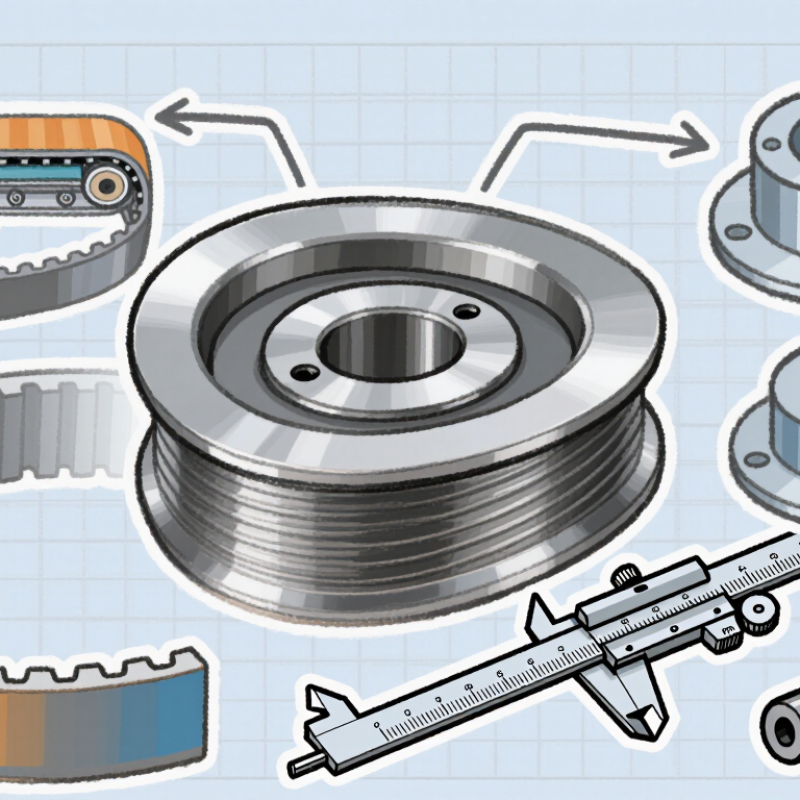
A T5 timing belt uses a nominal tooth pitch of 5 mm. DIN 7721-1 specifies dimensions for metric trapezoidal synchronous belts, including the T profile. Pitch is the distance between corresponding points on adjacent teeth, measured along the belt’s pitch line. It is not the pulley’s outside diameter. Easy to confuse.

Pulley tooth count sets its pitch diameter. Using the standard relationship, pitch diameter equals tooth count multiplied by belt pitch, divided by pi. A 20-tooth T5 pulley therefore has a pitch diameter of about 31.8 mm. This is a calculated value, not a direct measurement across the pulley’s outer edges. Check tooth profile and belt width against the belt specification; a matching pitch alone does not guarantee correct engagement.

For selection, confirm the belt’s stated width, tooth profile, and required pulley tooth count before ordering. Also check shaft bore, mounting method, and available clearance around the pulley. A narrow belt can be overloaded; a wider belt may not fit the assembly. Pulley alignment and correct tension matter, too, because poor tracking can wear tooth edges. DIN dimensions provide a sound starting point, but the actual drive load and operating conditions still need review. A little uncertainty remains until those are known.
Identifying the Application’s Load, Speed, and Operating Conditions

Before choosing a T5 pulley, define the driven load, required speed, and duty cycle. Record continuous torque, startup peaks, reversing, and hours per day. A motor’s nameplate power alone can hide short overloads. DIN 7721-1 specifies a 5 mm pitch for the T5 trapezoidal tooth profile. Use that pitch with pulley tooth count and shaft speed to calculate belt speed. For example, a 20-tooth pulley at 1,000 rpm runs the belt at about 1.67 m/s. A useful check. Then verify transmitted power, pulley width, and tooth engagement against a synchronous-belt engineering sizing chart; pitch alone does not establish load capacity.

Operating conditions can change the selection. Dust or oil may reduce grip or damage belt materials, while heat can shorten service life. Check the manufacturer’s material limits for the actual temperature and contaminants. Also note shaft alignment, center distance, and available tensioning adjustment. Frequent starts, sudden stops, and vibration deserve extra attention. A clean calculation can still miss those effects. If the drive carries a variable load, measure or estimate the peak torque rather than sizing only for its average. Record the assumptions, especially when the real duty cycle is uncertain. DIN 7721-1 provides profile dimensions; application-specific load capacity must be checked against the selected belt’s engineering data.

Matching Pulley Tooth Count, Width, and Bore to the Belt

How to Choose the Right T5 Belt Pulley in 2026?
Matching Pulley Tooth Count, Width, and Bore to the Belt

Start with the belt profile, not the shaft. DIN 7721-1 dimensional tables specify a 5 mm pitch for T5 timing belts. A 20-tooth pulley therefore has a 100 mm pitch circumference and an approximately 31.8 mm pitch diameter. Tooth count affects speed ratio and engagement, so do not select it from outer diameter alone. Check the driven load and minimum tooth count against the belt’s engineering data.

Match pulley face width to the belt’s nominal width, then check that the teeth engage fully without edge overhang. Measure the shaft itself. Choose a finished bore, keyway, or clamp style that suits the shaft and required torque. A nominal 10 mm shaft does not guarantee a 10 mm slip-fit bore; tolerances and fastening method matter. I would recheck this detail: small clearance errors can cause wobble or uneven wear.

Tips: Verify pitch and width from the belt marking or drawing. Check bore tolerance, keyway dimensions, and pulley face width on the component drawing before ordering. DIN 7721-1 provides the dimensional reference for the T-profile pitch data cited here.

Selecting Pulley Material, Flanges, and Mounting Features

A T5 pulley uses a 5 mm tooth pitch, but pitch alone does not determine the right choice. Material matters. Aluminum keeps rotating mass low and suits many light-duty drives. Steel can handle greater loads, though it adds weight and may need corrosion protection in damp settings. Match the pulley to the load, speed, and environment. A small weight saving is not always worth a shorter service life.

Flanges help keep the belt from walking off the pulley. They are especially useful when alignment may shift slightly during operation. Check that the flange arrangement fits your layout and does not interfere with nearby parts. More flange protection is not always better; poor alignment still causes wear. It is easy to overlook that detail.

Mounting features deserve the same care. Confirm the bore diameter and shaft fit, then choose a keyway, set-screw hub, or clamping style suited to the expected torque. A loose fit can allow movement, while an overly tight fit can complicate installation. Check the drawing, not just the product name. Measure the shaft and available clearance before ordering. Sometimes the simplest-looking mount is the wrong one.

Checking Compatibility, Installation, and Maintenance Requirements

A T5 pulley is designed for a belt with a 5 mm tooth pitch, but pitch alone does not confirm compatibility. Check the belt’s tooth profile and width against the pulley, then verify the tooth count, bore, and shaft fit. A pulley that slides onto the shaft may still have the wrong bore or keyway. Small mismatch, big trouble.

Consider the machine’s speed, load, and operating environment before choosing pulley material. Dust, moisture, and heat can affect wear, while a heavier pulley may change how a system starts and stops. During installation, keep the shafts parallel and the pulley faces aligned. Set belt tension using the equipment maker’s guidance; excessive tension can strain bearings, while a loose belt may skip teeth. It is easy to over-tighten by feel.

After fitting, turn the system by hand when it is safe to do so, checking for binding or uneven tracking. Run it briefly, then look for belt drift, unusual noise, or heat near the bearings. Recheck alignment and tension after the belt has settled. During routine maintenance, inspect for cracked teeth, fraying, debris, and uneven wear. A clean-looking belt is not always a healthy one, so check its tooth roots closely. If wear returns quickly, revisit alignment and load assumptions rather than replacing parts on repeat.