2026 How to Choose the Best Resistant Belt for Your Needs?
Choosing the right resistant belt is crucial for many industries. A resistant belt must fit your specific needs, ensuring durability and efficiency. Different materials and designs offer varying levels of resistencia.
Take a moment to consider your environment. Will your belt face extreme temperatures or heavy loads? These factors greatly influence your selection. A high-quality resistant belt should withstand wear and tear. Look for belts that have been tested under real-life conditions.
Sometimes, it is easy to overlook details. A slightly too-small belt may cause discomfort. A bell that is too large could lead to inefficiency. Exploring options with a focus on your unique requirements will lead to better choices. In this guide, we will explore how to navigate the many options available in the market.
Understanding the Different Types of Resistant Belts Available in 2026
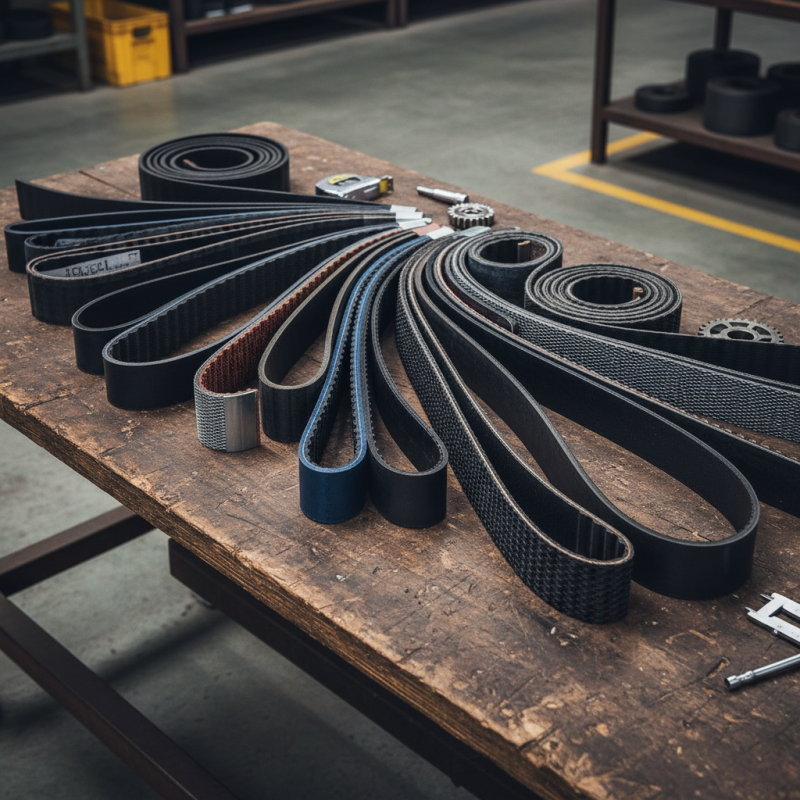
When selecting a resistant belt in 2026, consider the various types available. Each type serves a unique function. For instance, heavy-duty belts are designed for extreme conditions. These belts often withstand abrasive materials and harsh weather. They are ideal for industrial environments.
In contrast, lightweight options exist for less demanding applications. These belts provide comfort and flexibility. They are often more suitable for everyday tasks. A common issue with some lightweight belts is their durability. Users may find they wear out quicker than expected.
Another important aspect is material. Belts made from synthetic fibers tend to offer better resistance against chemicals and moisture. However, they may lack the breathable quality of natural materials. It's crucial to assess your specific needs and the environment in which you will use the belt. Make sure to think about these factors before making a purchase.
Key Factors Influencing the Selection of Resistant Belts for Various Industries
When selecting a resistant belt, several key factors need to be considered. The material is critical. Different belts are made from rubber, polyester, or polyurethane. Each has specific resistance properties. For instance, rubber belts can resist abrasion but may not handle extreme temperatures. Think about the environment in which the belt will operate. Extreme heat, cold, or exposure to chemicals can affect performance.
Tips: Always check the specifications carefully. Know the maximum load a belt can handle. Underestimating this can lead to failures. Consider the application. Some industries require belts that resist oil or grease. This is especially true in manufacturing or food processing environments.
Another important aspect is the belt width and length. Incorrect sizes can lead to slippage or poor performance. Some belts may require special installation techniques. This can add complexities. A belt that fits perfectly will last longer and perform better.
Tips: Take accurate measurements before purchasing. Don’t rely on old belts for size. Test the belt in real conditions, if possible. This can help you better understand its resilience. Each industry has unique demands. Be sure to reflect on how the belt matches your specific needs.
2026: Key Factors Influencing the Selection of Resistant Belts for Various Industries
Comparative Analysis of Material Durability and Performance in Resistant Belts
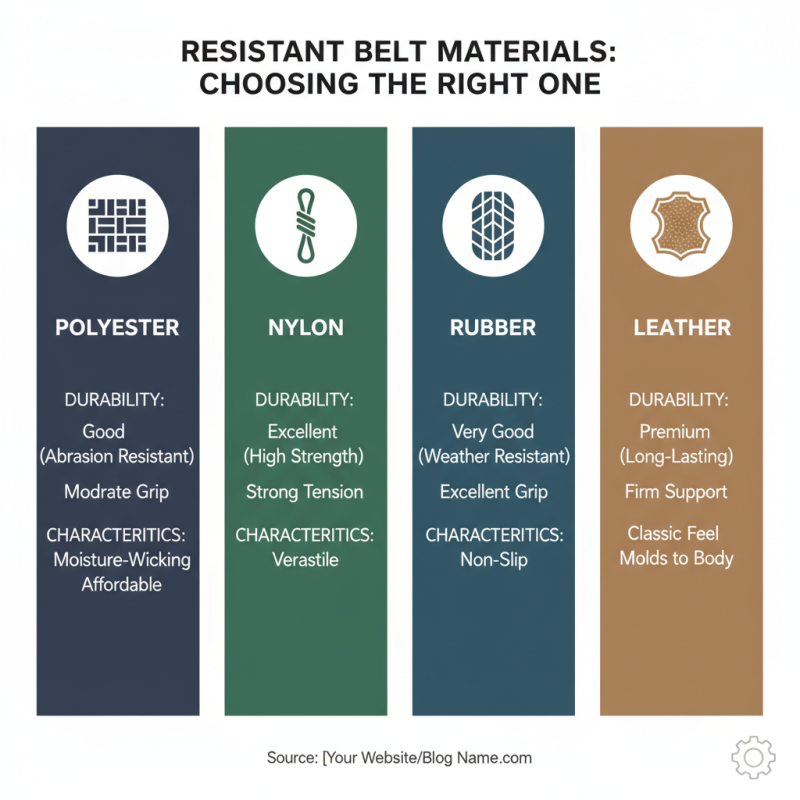
Choosing the right resistant belt can be challenging. Durability and performance vary significantly among different materials. Common belt materials include polyester, nylon, rubber, and leather. Each material has distinct properties that influence its resistance to wear and tear. For example, nylon is known for its strength, while rubber provides excellent grip.
Additionally, the environment where the belt will be used is essential. Is it for heavy industrial use or light daily tasks? Conditions like moisture, heat, and chemical exposure also play a crucial role. Tips for selection: consider the load-bearing capacity and check for any specific certifications. Look for user reviews on performance in real-world scenarios.
It's often tempting to opt for the cheapest option. However, this can lead to increased replacements and costs over time. Observe the stitching and buckle quality. Poor craftsmanship can compromise performance. Choosing a reliable belt might require a higher upfront investment, but it pays off in durability. Always reflect on your needs and environment before making a purchase to avoid regret later.
Industry-Specific Applications: Choosing Resistant Belts for Optimal Efficiency
Choosing the right resistant belt is crucial for specific industrial applications. A recent report by the Industrial Research Institute indicates that 65% of machinery failures are linked to inadequate belt performance. This statistic highlights the importance of efficiency in operations. For example, mining operations often require belts that can withstand harsh environments, including extreme temperatures and abrasive materials.
In food processing, hygiene standards are paramount. Resistant belts must not only endure wear but also comply with sanitation regulations. The Food Industry Association states that improper equipment can lead to contamination, resulting in significant financial losses. Some companies report that adjusting belt materials improved their processing efficiency by 30%.
However, it’s not always clear which materials offer the best resistance. Users sometimes overlook specifications, leading to miscalculations. There’s a common misconception that all resistant belts are alike. This can result in the wrong selection for specific conditions, impacting performance and longevity. Evaluating operational needs is essential but often not done thoroughly. Careful consideration can prevent costly mistakes.
Maintenance Guidelines for Prolonging the Life of Resistant Belts in Use
Maintaining resistant belts can significantly extend their lifespan. Proper care is essential, as neglect may lead to premature wear and tear. Regular inspections help identify any signs of damage or fraying. Keeping belts clean is equally important. Dust and debris can cause abrasion over time. Utilize a damp cloth for routine cleaning to enhance their performance.
Tips: Check for any unusual noises during operation. They may indicate wear that needs attention. Schedule maintenance every few months. This proactive approach saves time and costs down the road.
Storage also plays a crucial role in preserving belt integrity. Avoid exposing them to extreme temperatures or direct sunlight. Improper storage can lead to deformation. Consider coiling belts loosely rather than tightly. An improper winding may cause kinks or twists, affecting performance negatively. Consistent attention to these details ensures you get the most out of your resistant belts.



 +86-19862000127
 Phone
Phone Email
Email