Top 10 Benefits of Using Tapered Pulleys for Your Projects?
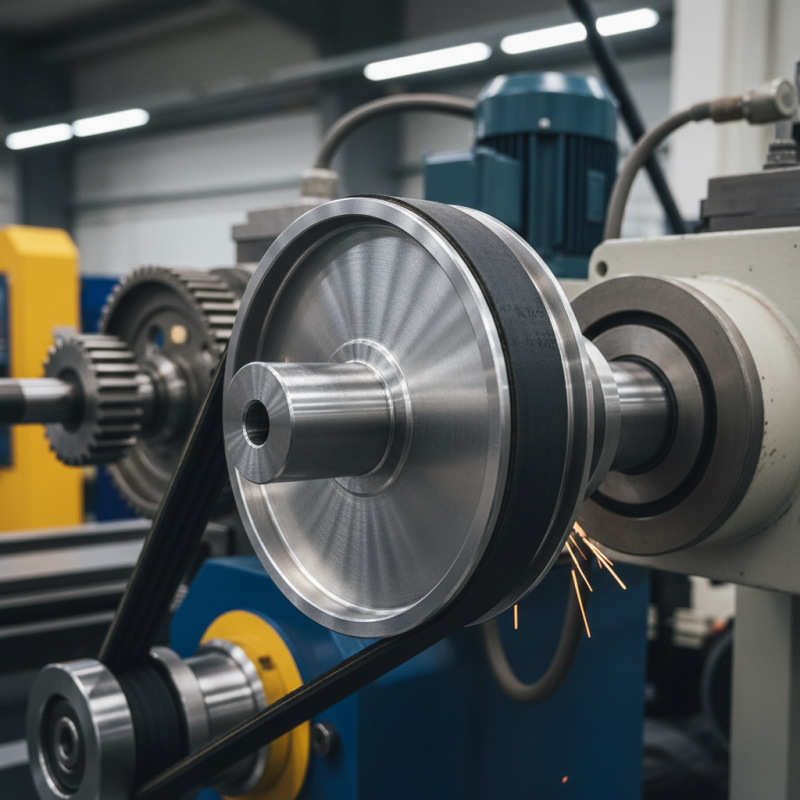
Tapered pulleys are essential components in many mechanical systems. Their unique shape allows for efficient transmission of power. This design leads to reduced wear and tear on belts and other parts.
In various projects, using tapered pulleys can improve performance significantly. They create smoother rotations and minimize vibrations. This efficiency can lead to increased productivity in industrial settings. However, choosing the right tapered pulley is not always straightforward. There are different sizes and materials to consider.
Though tapered pulleys offer numerous benefits, there can be challenges. Projects might not always go as planned. Miscalculations in size or alignment can lead to issues later on. It is crucial to evaluate each project’s specific needs carefully. Embracing both the strengths and potential pitfalls of tapered pulleys is vital for success.
Benefits of Enhanced Stability in Tapered Pulley Designs
Tapered pulleys have gained popularity for their enhanced stability in various projects. Their design allows for a tighter fit between the belt and the pulley. This can lead to greater efficiency during operation. The tapered shape helps to center the belt, reducing the risk of slippage. In practical terms, this means less downtime for your equipment.
Stability is crucial in any mechanical system. A poorly aligned pulley can cause vibrations and premature wear. Tapered pulleys minimize these issues by maintaining better alignment. This design feature ensures smoother operation and less noise. Moreover, they can adapt better to variations in load, which is often overlooked. However, the initial setup can require precise measurements, and setbacks may occur if not calibrated correctly.
Another aspect to consider is their impact on the overall project lifespan. While tapered pulleys may have higher upfront costs, their durability often outweighs this. They can withstand more stress, leading to fewer replacements down the line. Yet, users must regularly assess their condition, which is often neglected. Balancing the benefits and initial challenges is key to leveraging their advantages effectively.
Top 10 Benefits of Using Tapered Pulleys for Your Projects
| Benefit |
Description |
| Enhanced Stability |
Tapered pulleys provide better balance and reduce wobbling, increasing overall stability in mechanical systems. |
| Improved Efficiency |
They facilitate smoother operations, leading to energy savings and reduced operational costs. |
| Reduced Wear |
The design minimizes friction between pulley and belt, prolonging the lifespan of components. |
| Flexible Design |
Tapered pulleys can be designed in various sizes and shapes to fit specific applications and constraints. |
| Noise Reduction |
The tapered design helps in dampening vibrations, leading to quieter operation. |
| Better Alignment |
They allow for easier alignment of belts, reducing the likelihood of misalignment issues. |
| Cost-Effective |
The long-term operational savings on maintenance and energy make them a cost-effective choice. |
| Enhanced Load Distribution |
Promotes an even distribution of loads, reducing stress on equipment. |
| Versatility |
Suitable for a wide range of applications in various industries, from automotive to manufacturing. |
| Simplified Maintenance |
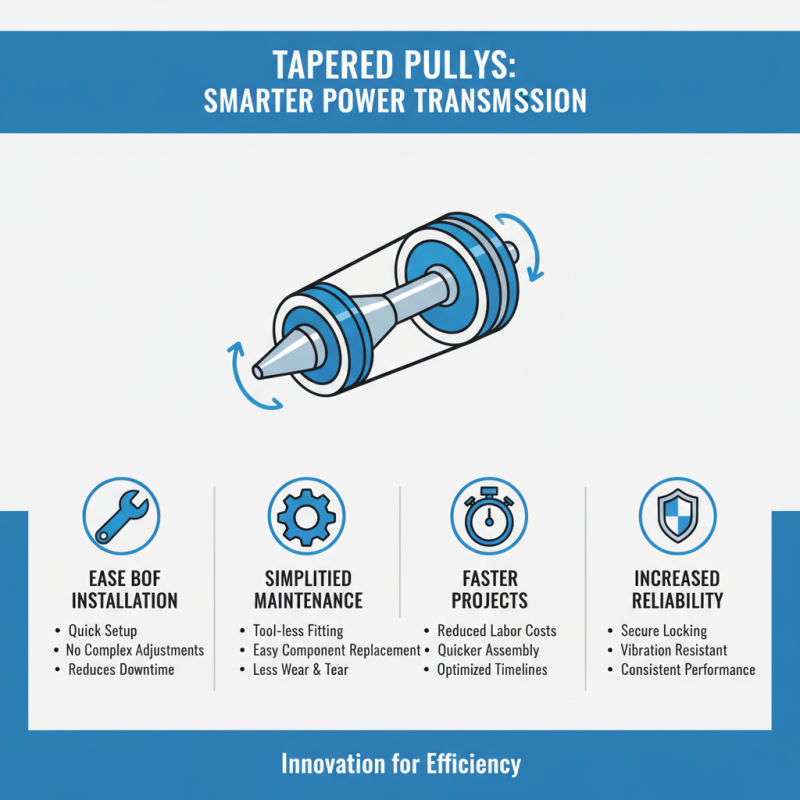
Their design allows for easier inspection and replacement of belts, streamlining maintenance processes. |
Improved Efficiency in Power Transmission through Tapered Pulleys
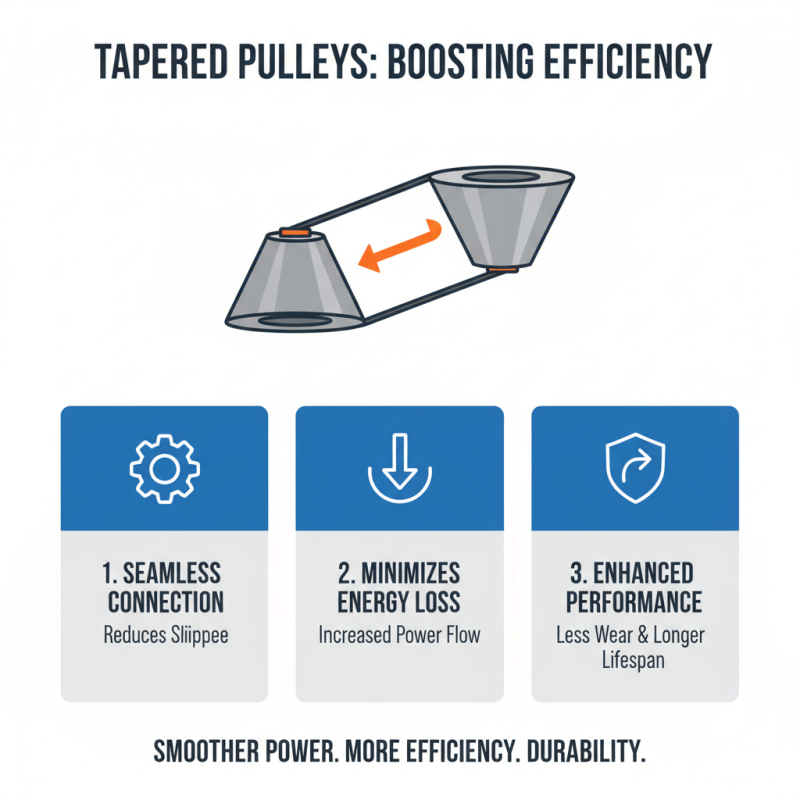
Tapered pulleys play a significant role in enhancing power transmission efficiency. These pulleys create a seamless connection between components, reducing slippage during operation. As power flows through a tapered pulley, it minimizes energy loss, leading to improved overall performance. This translates to less wear on machinery and longer lifespans for equipment.
One notable benefit is the increased grip they provide. The taper angle allows for a tighter fit, ensuring that belts maintain their position. This creates consistent speed throughout the system. However, it’s essential to assess alignment carefully. Misalignment can lead to increased friction and energy loss. Regular checks are necessary to ensure optimal function.
Incorporating tapered pulleys might feel like a small change, but their impact is substantial. The design allows for smoother transitions of torque between shafts. Yet, not every setup may benefit equally. It’s crucial to analyze your specific needs and constraints. Sometimes, employing tapered pulleys might complicate maintenance routines. Reflecting on these challenges fosters a better understanding of their true value.
Reduction of Wear and Tear on Components with Tapered Pulleys
Tapered pulleys offer significant advantages, particularly in reducing wear and tear on components. These pulleys have a unique design that allows for better alignment between belts and pulleys. This alignment minimizes slippage, which can lead to excessive friction. When components experience less friction, their lifespan naturally increases.
Moreover, tapered pulleys adapt to varying load conditions. This adaptability helps avoid overload situations that often cause premature wear. With less strain on belts and bearings, maintenance becomes less frequent. However, it’s essential to ensure that the pulley is correctly sized and installed. A poor fit can counteract these benefits, leading to unexpected failures.
Using tapered pulleys does not eliminate all issues. Sometimes, their angles require precise calculations and adjustments. That could mean more planning time in project management. If not handled properly, a seemingly simple installation could turn complicated. Each project poses unique challenges, and refining the use of tapered pulleys may take time. Nonetheless, their potential to reduce wear and improve efficiency is evident.
Top 10 Benefits of Using Tapered Pulleys for Your Projects
Versatility in Applications: Tapered Pulleys Across Various Industries
Tapered pulleys are increasingly popular across various industries due to their versatility. This design allows for efficient power transmission and smooth operation in different environments.
In the automotive sector, reports indicate that using tapered pulleys can improve the efficiency of drive systems by up to 15%. This efficiency boost stems from the way these pulleys manage belt tension and alignment.
In the agricultural industry, tapered pulleys are essential for machinery performance. Studies show that agriculture equipment using tapered designs can reduce wear and extend lifespan, ultimately leading to cost savings. The adoption of these pulleys in conveyor systems has also shown promising results. A survey highlighted that over 60% of operators noted a decrease in maintenance needs over six months.
However, the implementation of tapered pulleys is not without challenges. Precision in alignment remains crucial; misalignment can lead to significant failures. It’s important to regularly monitor these systems to avoid costly downtimes. While the initial investment might be higher, many industries find that the long-term benefits outweigh the drawbacks. Every application requires careful consideration.



 +86-19862000127
 Phone
Phone Email
Email